Drop D Tuning Guide for Guitar
Learn Drop D tuning, the string notes, why guitarists use it, and how to switch from standard tuning without confusion.
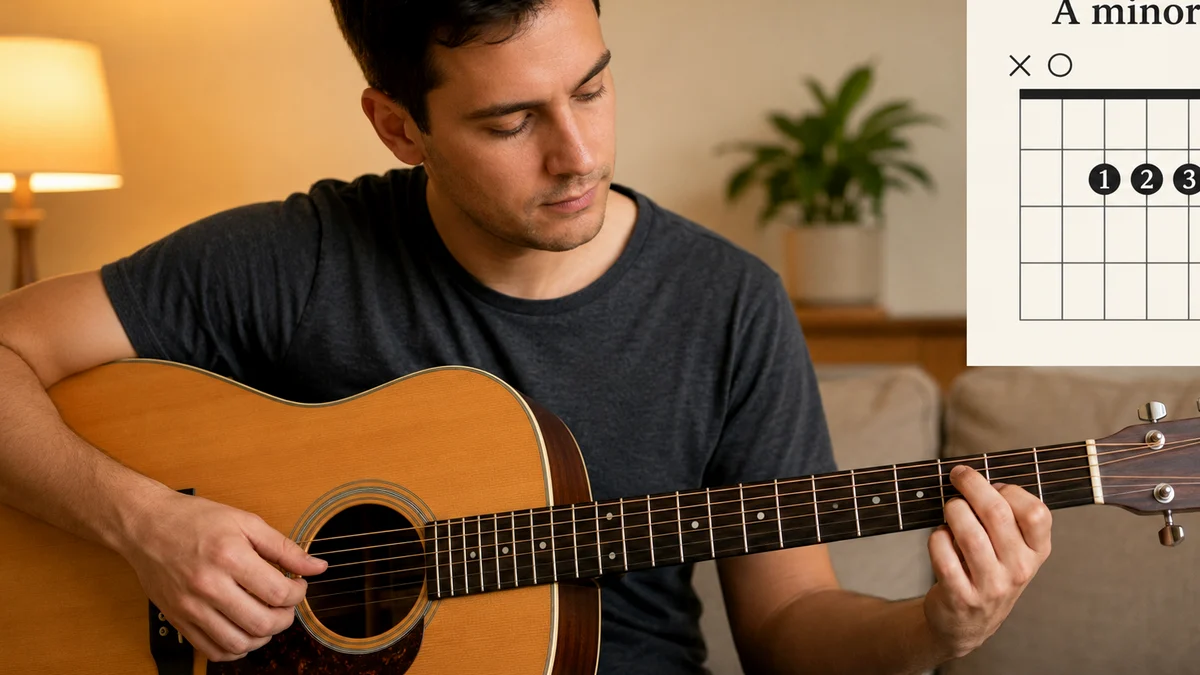
For many guitarists, the move beyond standard tuning begins with a simple turn of a single tuning peg. That first experience of lowering the pitch of the lowest string creates a heavier, deeper, and more resonant sonic world.
Drop D tuning is one of the most popular alternate tunings in modern music. It has shaped the sound of legendary rock, metal, grunge, and acoustic tracks for decades.
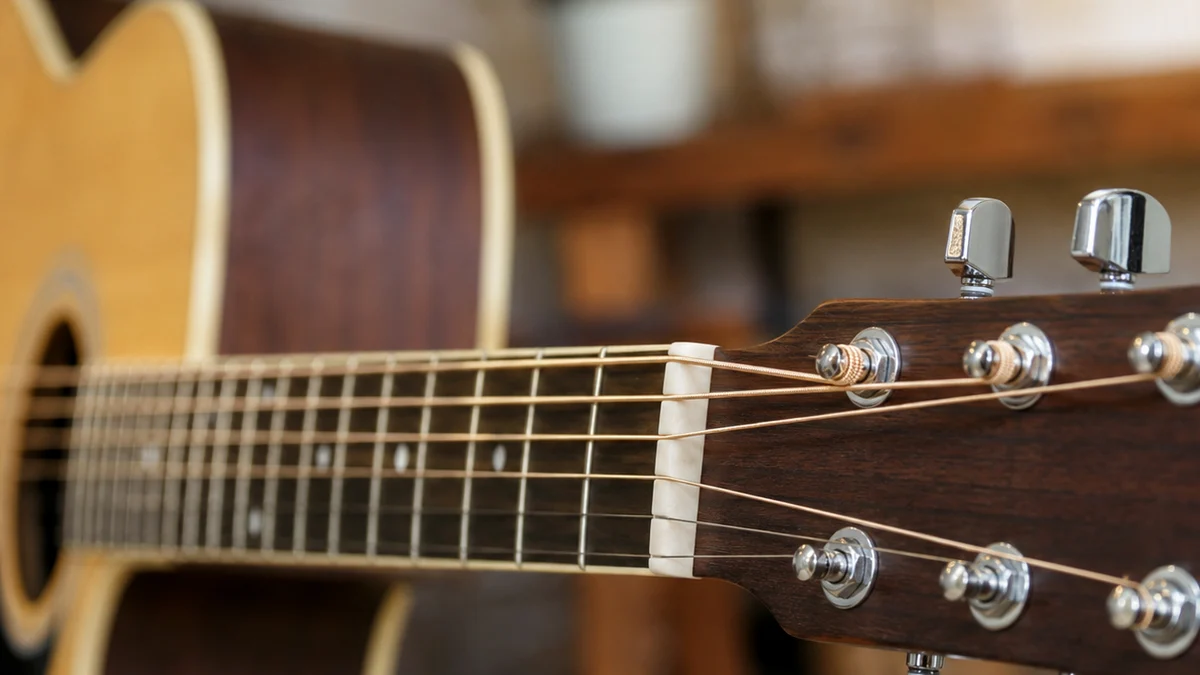
Whether you want to play heavy riffs with minimal finger movement or add a rich, ringing bass register to your acoustic fingerpicking, mastering this tuning is an essential step in your development as a player. This guide walks you through the transition from standard tuning to Drop D, explaining how it works, how to get into it, and how to use it in your playing.
What is Drop D Tuning
Drop D tuning is an alternative guitar tuning where the lowest string (the 6th string) is lowered by one whole step (two semitones) from E down to D. The other five strings remain exactly the same as they are in standard tuning.
This small adjustment alters the relationship between the lowest string and the rest of the fretboard, creating a layout known as DADGBE tuning.
Drop D Tuning Definition Drop D is an alternate guitar tuning where the 6th string is detuned one whole step from E to D, resulting in the pitch sequence D-A-D-G-B-E (from lowest pitch to highest). This lowers the overall range of the instrument and allows power chords to be fretted with a single finger.
Is Drop D Tuning Good for Beginners?
Yes, Drop D is highly recommended for beginners. It is arguably the easiest alternate tuning to learn because it only requires you to change the pitch of one string.
Because the top five strings remain in standard tuning, you do not have to relearn your scale shapes, lead patterns, or open chords on those strings. Additionally, the physical layout of the tuning makes playing basic rock chords much easier on your fretting hand, allowing you to focus on rhythm, timing, and strumming dynamics early in your learning process.
Standard Tuning vs. Drop D: The Core Differences
To understand why this tuning is so popular, it helps to compare it directly to standard tuning. In standard tuning, the intervals between adjacent strings are fourths, except for the interval between the 3rd and 2nd strings, which is a major third.
When you detune the 6th string to D, you change the interval between the 6th and 5th strings from a perfect fourth (E to A) to a perfect fifth (D to A). This interval shift is what changes how chords are constructed on the lowest strings.
| String Number | String Name (Standard) | Standard Pitch | Drop D Pitch | Adjustment Required |
|---|---|---|---|---|
| 6 | Low E | E2 | D2 | Detune 1 whole step (down to D) |
| 5 | A | A2 | A2 | No change |
| 4 | D | D3 | D3 | No change |
| 3 | G | G3 | G3 | No change |
| 2 | B | B3 | B3 | No change |
| 1 | High E | E4 | E4 | No change |
By dropping the 6th string to D, you gain a deep, resonant low D note that sits an octave below the open 4th string. This extends the bass range of your guitar, giving your riffs and chord progressions a heavier, more authoritative foundation.
How to Tune to Drop D: Step-by-Step
Getting your guitar into Drop D is a straightforward process. You can do this using an electronic tuner, by matching pitches by ear, or by using natural harmonics.
Method 1: Tuning with an Electronic Tuner
Using a reliable chromatic tuner is the most accurate way to drop your pitch. You can use the Chords.me Guitar Tuner to get your strings perfectly in pitch.
- Turn on your tuner and pluck your open 6th string (the thickest string).
- Slowly turn the tuning peg for the 6th string toward you (slackening the string) to lower the pitch.
- Watch the tuner display as the pitch drops from E, through D#, down to D.
- Fine-tune the string until the tuner indicates a perfect D.
- Check the tuning of the remaining five strings (A, D, G, B, E), as the change in overall neck tension can sometimes cause them to drift slightly sharp.
Method 2: Tuning by Ear (Matching the 4th String)
If you do not have a tuner nearby, you can use the strings on your guitar to find the correct pitch. Since your 4th string is already tuned to D (an octave higher than your target note), you can use it as a reference.
- Pluck your open 4th string (D) and let it ring out.
- Pluck your open 6th string (E).
- Slowly turn the 6th string tuning peg to lower the pitch.
- Listen closely to the pitch difference. As the 6th string approaches D, you will hear the interval become a clean octave.
- When the two notes sound perfectly in harmony (with no acoustic "beats" or warbling), your 6th string is tuned to D.
Method 3: The 12th Fret Harmonic Method
For intermediate players, using natural harmonics is a highly accurate way to match the pitches of the low D string and the 4th string.
- Lightly touch the 6th string directly above the 12th fret wire (do not press it down to the fret).
- Pluck the string to produce a clear, high-pitched harmonic.
- Pluck the open 4th string (D).
- Lower the pitch of the 6th string until the 12th-fret harmonic matches the pitch of the open 4th string exactly.
Why Use Drop D Tuning?
Once you know how to tune to drop D, the next step is understanding what is drop D tuning used for in actual musical scenarios. There are several structural and sonic reasons why guitarists choose this tuning over standard.
1. The One-Finger Power Chord
In standard tuning, playing a standard root-fifth-octave power chord requires you to use three fingers (or a index finger and a pinky/ring finger bar) across three strings. For example, an G power chord requires your index finger on the 3rd fret of the 6th string, your ring finger on the 5th fret of the 5th string, and your pinky on the 5th fret of the 4th string.
Because you have lowered the 6th string by two semitones, those same notes now align horizontally across the same fret.
To play a power chord in Drop D, you simply lay one finger flat across the lowest three strings at any fret. This one-finger power chord capability allows you to slide chords up and down the neck with strong speed and minimal physical exertion. It also frees up your other fingers to play melodies, embellishments, or extensions over the top of your rhythm playing.
2. Deeper Bass Response
The low D string provides a heavy, resonant bass note that is unavailable in standard tuning. This extra depth is highly prized in heavy rock and metal genres because it makes riffs sound strong, especially when played through a distorted amplifier. In acoustic music, this low D acts as a powerful drone note, mimicking the rich bass register of a piano or a cello.
3. Unique Chord Voicings
Drop D allows you to play chord voicings that are physically impossible in standard tuning. For example, you can play a full D Major chord that includes a low, booming D root note on the bottom, creating a strong sound.
To do this, you play the open 6th, 5th, and 4th strings together, while fretting a standard D major shape on the top three strings. This produces a six-string D major chord with immense depth and sustain.
What Genres Use Drop D Tuning?
While Drop D is often associated with heavy metal and hard rock, its musical utility spans a wide variety of styles. Let us look at what genres use drop D tuning and how players in those genres apply it.
Heavy Metal and Hard Rock
In the world of heavy music, Drop D is a foundational tool. The ability to shift between power chords rapidly allows for fast-paced, syncopated riffing.
Guitarists can execute rapid palm-muted chugs on the open low D string while quickly fretting higher power chords. This style of playing defines the sound of bands like Tool, Rage Against the Machine, and Lamb of God.
Grunge and Alternative Rock
In the 1990s, grunge and alternative rock bands embraced Drop D to create a raw, moody, and aggressive sound. The tuning allowed these artists to write heavy, mid-tempo riffs that sounded strong even in three-piece band lineups.
Bands like Nirvana, Soundgarden, and Alice in Chains used the tuning to write some of their most iconic hits, blending heavy distortion with simple, driving chord progressions.
Folk, Country, and Acoustic Fingerstyle
Acoustic fingerstyle players frequently use Drop D to create a rich, self-accompanying performance. By dropping the 6th string, a guitarist playing in the key of D can keep the low D string ringing out as a continuous drone while their other fingers play melodies and chords on the higher strings. This technique creates a lush, full sound that makes a single guitar sound like an entire ensemble.
Classical and Blues
In classical guitar literature, Drop D (often referred to as "Drop D transposition") is used to perform pieces originally written for lute or other historical stringed instruments. It allows classical players to access lower bass notes that are crucial for maintaining the counterpoint of polyphonic music. Blues players also use it to get a deep, swampy bass groove going under their slide licks.
Songs That Use Drop D Tuning
One of the best ways to understand this tuning is to learn songs that use drop D tuning. Here are several classic examples across different genres that demonstrate the versatility of the layout.
1. "Everlong" by Foo Fighters
This alternative rock classic is built entirely around the unique chord voicings made possible by Drop D. Dave Grohl uses the lowered 6th string to play suspended chord shapes that slide up and down the neck, creating a driving, emotional rhythm track that would be incredibly difficult to play in standard tuning.
2. "Killing in the Name" by Rage Against the Machine
Tom Morello’s iconic opening riff is a masterclass in Drop D riffing. The main groove utilizes the open low D string for a heavy, syncopated bounce, interspersed with bluesy bends on the higher frets. The heavy, aggressive nature of the song relies heavily on the extra weight provided by the detuned 6th string.
3. "Heart-Shaped Box" by Nirvana
Kurt Cobain utilized Drop D to create the dark, brooding atmosphere of this track. The verses feature a haunting arpeggiated riff that moves from an A to an F to a D, utilizing the low D string to give the progression a somber, heavy undertone before exploding into a strong, distorted chorus.
4. "Moby Dick" by Led Zeppelin
Jimmy Page was an early adopter of Drop D in hard rock. This classic instrumental track features a driving, blues-based riff that utilizes the open low D string to create a heavy, rolling groove that serves as the perfect foundation for John Bonham's legendary drum solo.
5. "Harvest Moon" by Neil Young
On the acoustic side, Neil Young uses Drop D to create a warm, shimmering accompaniment. The low D string provides a deep, resonant bass note that anchors the gentle strumming pattern, allowing the natural harmonics and high-register chords to ring out beautifully over the top.
Common Pitfalls and How to Avoid Them
While switching to Drop D is relatively simple, there are a few technical challenges that players run into. Understanding these issues will help you keep your guitar sounding great and playing smoothly.
1. The "Floppy" String Feeling
When you detune 6th string from E down to D, you reduce the physical tension on that string. This can make the string feel loose or "floppy" under your fingers.
If you play with a heavy pick attack, a loose string can vibrate excessively, causing it to hit the frets and create unwanted fret buzz.
- The Fix: If you plan to keep your guitar in Drop D for extended periods, consider using a slightly heavier string gauge. If you normally play light strings (such as a.009 to.042 set), switching to a "light-heavy" hybrid set (like.010 to.052) will provide a thicker low string that maintains proper tension even when tuned down to D.
2. Intonation and Tuning Instability
Because a guitar neck is held in place by a balance of tension between the steel strings and the internal truss rod, dropping the tension of the 6th string can cause the neck to relax slightly. This shift in tension can cause the other five strings to go slightly sharp.
- The Fix: After you drop your 6th string to D, quickly check the tuning of your other strings. You may need to make minor adjustments to your A, D, G, B, and E strings to bring the entire instrument back into perfect harmony.
3. Sharp Notes from Over-Fretting
Because the tension on the low D string is lower, it requires less physical pressure to press the string down to the fretboard. A common mistake among beginners is squeezing the neck too hard when playing a one-finger power chord. This excess pressure stretches the string, pushing the notes sharp and making your chords sound out of tune.
- The Fix: Practice using the minimum amount of pressure required to get a clean note. Press your finger down just behind the fret wire, using only enough force to prevent buzzing. This will keep your chords perfectly in tune and reduce hand fatigue.
Practical Exercises for Drop D Beginners
To help you get comfortable with the physical layout of Drop D, try these simple exercises. They are designed to help you build coordination, master the one-finger power chord, and explore the unique resonance of the tuning.
Exercise 1: The One-Finger Chord Slide
This exercise helps you build precision when sliding power chords up and down the neck.
- Start by placing your index finger flat across the 6th, 5th, and 4th strings at the 3rd fret (G power chord).
- Strum the three strings together once, letting the chord ring.
- Slide your finger up to the 5th fret (A power chord) and strum once.
- Slide up to the 7th fret (B power chord) and strum once.
- Slide back down to the open strings (D power chord) and let them ring out.
- Repeat this sequence, focusing on keeping your finger flat and maintaining a smooth transition between frets.
Exercise 2: The Low-D Pedal Point
A "pedal point" is a repeating bass note played underneath shifting melodies or chords. This technique is highly common in rock, metal, and classical music.
- Pluck the open 6th string (low D).
- Play the 3rd fret of the 5th string, then pluck the open 6th string again.
- Play the 5th fret of the 5th string, then pluck the open 6th string again.
- Play the 7th fret of the 5th string, then pluck the open 6th string again.
- Focus on keeping a steady, driving rhythm, ensuring that the open low D string rings out clearly between the fretted notes.
Exercise 3: Combining Open Chords with the Low D
This exercise is perfect for acoustic players who want to explore the rich, resonant side of Drop D.
- Tune your guitar to Drop D.
- Play a standard G Major chord, but make sure to fret the 6th string at the 5th fret instead of the 3rd fret. (Because the string is dropped two semitones, you must move your finger up two frets to play the G note).
- Transition to a standard D Major chord, allowing the open 6th string to ring out as your bass note.
- Move to an A Major chord (keeping your strumming focused on the top five strings).
- Notice how the transition back to the D Major chord feels incredibly strong and deep compared to playing in standard tuning.
Taking Your First Steps in Drop D
Transitioning to Drop D tuning is one of the most rewarding steps you can take as a developing guitarist. It bridges the gap between simple, accessible fretboard mechanics and heavy, complex musical textures. By lowering just one string, you open up a large set of new chord voicings, lightning-fast power chord transitions, and a deep, resonant bass response that can breathe new life into your practice sessions.
As you explore this tuning, pay close attention to how the reduced tension affects your instrument's playability and how you can use the altered intervals to write your own riffs and chord progressions. Keep your guitar in tune using precise tools, practice your finger positioning to avoid sharp notes, and enjoy the rich, powerful soundscapes that this classic alternate tuning has to offer.
Related Chords.me Guides
For the next step, read Drop C Tuning Guide: Notes, Setup, and Common Mistakes, Open G Tuning Guide, and Chromatic Tuner Guitar Guide: How to Tune Accurately as a Beginner before moving on. You can also test the same idea in another key and check each string with the guitar tuner while practicing this lesson.
Practice This With Chords.me
Use the Guitar Tuner to check each string slowly before practicing the example. Focus on clean notes and steady timing before increasing speed.
Frequently Asked Questions
What is special about Drop D tuning?
Drop D lowers only the 6th string from E to D, creating DADGBE tuning. This gives the guitar a deeper bass note and makes one-finger power chords possible on the lowest three strings.
Does Drop D tuning damage strings?
No, Drop D tuning does not normally damage strings. It lowers tension on the 6th string rather than increasing it, so it is generally safe for standard acoustic and electric guitars.
What bands use Drop D tuning?
Drop D is common in rock, metal, grunge, and acoustic fingerstyle music. Bands and artists such as Foo Fighters, Rage Against the Machine, Nirvana, Tool, Soundgarden, Led Zeppelin, and Neil Young have used Drop D in well-known songs.
How do you tune a guitar to Drop D?
Start from standard tuning, then lower only the 6th string from E down to D. You can match it to a tuner, compare it with the open 4th string D, or use the 12th-fret harmonic on the 6th string against the open 4th string.
Is Drop D easier than standard tuning?
Drop D can be easier for certain rock and metal parts because power chords on the lowest three strings can be played with one finger. The top five strings stay the same as standard tuning, so most familiar chord and lead shapes still work.
About the Contributor
Chords.me Tuning & Setup Desk Tuning, strings, and setup contributor
A brand contributor profile for Chords.me tuning and setup content. This desk focuses on tuning accuracy, string choice, fret buzz, intonation, action, and maintenance topics for everyday players. Content is checked for practical clarity, beginner readability, and accurate links to relevant Chords.me tools.