Open G Tuning Guide: D G D G B D Notes, Chords & Songs
Learn Open G tuning for guitar: D-G-D-G-B-D notes, how to tune from standard, essential Open G chord shapes, slide guitar tips, and songs that use Open G.
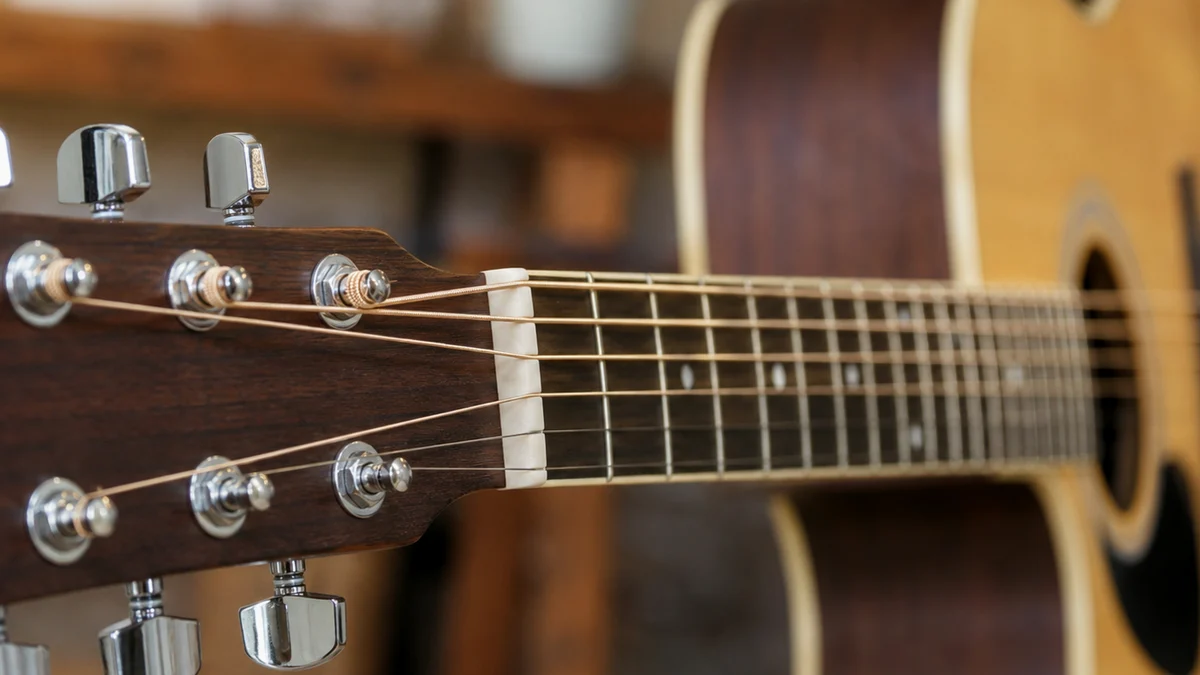
Open G tuning is a guitar tuning where the strings are tuned D-G-D-G-B-D from the lowest string to the highest string. When you strum all six open strings, they form a G major chord, which is why Open G is popular for slide guitar, blues, folk, and simple one-finger major chord shapes.
Strumming a standard-tuned guitar requires pressing down specific strings to form a chord. If you strum the open strings of a guitar tuned to standard tuning (E-A-D-G-B-E), the resulting sound is discordant and unresolved. Open tunings change this dynamic entirely. By adjusting the pitch of your strings, you can create a beautiful, harmonious chord without pressing down a single fret.
Among the many alternative tunings available to guitarists, Open G is one of the most versatile, historic, and accessible. It has served as the sonic foundation for Delta blues pioneers, classic rock legends, and acoustic folk fingerpickers.
This guide will walk you through the Open G tuning notes, explain how to tune from standard guitar tuning, show essential Open G chord shapes, and help you apply the tuning to slide guitar and classic repertoire.
Open G Tuning Notes: D G D G B D
The Open G tuning notes are:
| String | Standard Tuning | Open G Tuning | Change |
|---|---|---|---|
| 6th string | E | D | Tune down one whole step |
| 5th string | A | G | Tune down one whole step |
| 4th string | D | D | Same |
| 3rd string | G | G | Same |
| 2nd string | B | B | Same |
| 1st string | E | D | Tune down one whole step |
A quick way to remember it is: DGDGBD. The notes D, G, and B are the notes of a G major chord, so the open strings naturally ring as G major.
Open the free reference Guitar Tuner, select Open G, and tap a string to hear its target pitch. Match your guitar to that sound by ear; this tool plays reference tones and does not listen to your microphone. For automatic pitch detection, use a separate chromatic tuner.
The pitches from string 6 to string 1 are D2, G2, D3, G3, B3, D4. The repeated letters are in different octaves: do not tighten a bass string to match a thinner string at the same pitch.
What is Open Tuning?
An open tuning is a method of tuning a guitar so that the open strings, when struck together without fretting, produce a specific major, minor, or suspended chord. This differs from standard tuning, which is designed to facilitate scale patterns and complex chord voicings across various keys.
In an open tuning, the entire fretboard is rearranged to favor a single tonal center. This makes it incredibly easy to play major chords using a single finger barred across the neck, while also opening up unique drone possibilities and sympathetic string vibrations that are physically impossible to achieve in standard tuning.
How to Tune Your Guitar to Open G from Standard
To get into Open G, you must alter the pitch of three of your six strings. The target notes for Open G tuning are D-G-D-G-B-D (from the lowest, thickest string to the highest, thinnest string).
To understand how to tune guitar to open G from standard, let us look at the transition string by string:
- Sixth String (Low E): Tune down one whole step from E2 to D2, one octave below your open fourth string (D3).
- Fifth String (A): Tune down one whole step from A2 to G2, one octave below your open third string (G3).
- Fourth String (D): Leave this string exactly as it is in standard tuning.
- Third String (G): Leave this string exactly as it is in standard tuning.
- Second String (B): Leave this string exactly as it is in standard tuning.
- First String (High E): Tune down one whole step from E4 to D4, one octave above your open fourth string (D3).
Because you are lowering the tension on three of your strings, the overall pull on your guitar neck will decrease slightly. This can cause the remaining strings to drift slightly sharp.
Recheck all six strings after changing the tuning. Use a chromatic tuner for a pitch reading, or compare by ear with the Open G reference tones in the Guitar Tuner on Chords.me.
| String Number | Standard Pitch | Open G Pitch | Interval in G Major Triad | Action Required |
|---|---|---|---|---|
| 6 (Lowest) | E | D | 5th (Fifth) | Tune down one whole step |
| 5 | A | G | Root (Tonal Center) | Tune down one whole step |
| 4 | D | D | 5th (Fifth) | No change |
| 3 | G | G | Root (Tonal Center) | No change |
| 2 | B | B | 3rd (Major Third) | No change |
| 1 (Highest) | E | D | 5th (Fifth) | Tune down one whole step |
What is Open G Tuning Used For?
For tuning and setup context, compare this with DADGAD Tuning Guide for Beginners and Guitar Fretboard Notes Made Simple so the instrument stays easier to play and check.
Historically, Open G tuning has been a common choice of American roots music. It is frequently referred to as a classic blues tuning or "Spanish tuning," a name that dates back to parlor guitar pieces of the 19th century.
Delta Blues and Slide Guitar
Early blues musicians in the Mississippi Delta adopted Open G because it worked perfectly with slide guitar tuning. When you place a metal or glass slide across the strings, you can play clean, slide-driven major chords at any fret. Musicians like Muddy Waters, Robert Johnson, and Bukka White used Open G to create driving, rhythmic bass lines on the lower strings while simultaneously playing crying, vocal-like slide melodies on the higher strings.
Classic Rock and the Keith Richards Sound
In the late 1960s and 1970s, rock guitarists rediscovered the power of Open G. The most famous proponent of this tuning is Keith Richards of The Rolling Stones. Richards developed a highly influential style of rhythm guitar by removing the low sixth string from his Fender Telecaster entirely, leaving him with a five-string guitar tuned G-D-G-B-D.
By removing the low D, Richards could slam his hand down on the five remaining strings and get a clear G major chord with the root note (G) on the bottom, avoiding the muddy low-interval sound of the sixth string.
Folk and Fingerstyle Guitar
Acoustic folk and fingerstyle players use Open G to create lush, ringing arrangements. Because the tuning contains three D strings and two G strings, it creates a strong amount of sympathetic resonance. When you play a note on one string, the other strings tuned to the same pitch or octaves will vibrate in sympathy, creating a natural reverb effect that makes a single acoustic guitar sound much larger than it is.
Is Open G Tuning Good for Beginners?
For those just beginning their musical development, Open G is an incredibly friendly entry point to the instrument.
The Pros for Beginners
- Instant Gratification: You do not need to learn complex finger shapes to play your first chord. Strumming the open strings gives you a perfect G major.
- Simple Chord Progressions: By using a one-finger major chord, you can play dozens of three-chord songs within minutes.
- Focus on Rhythm: Because your fretting hand has less work to do, you can dedicate your mental energy to mastering strumming patterns, timing, and dynamics.
The Challenges for Beginners
While Open G is highly accessible, it does present a few hurdles. If you have spent time memorizing chord shapes in standard tuning, those shapes will no longer work. A standard C major chord or G major chord shape will sound highly dissonant in Open G.
You must learn a new fretboard layout. However, because the middle three strings (D, G, B) remain unchanged from standard tuning, any scale or chord fragment you know on those specific strings remains exactly the same.
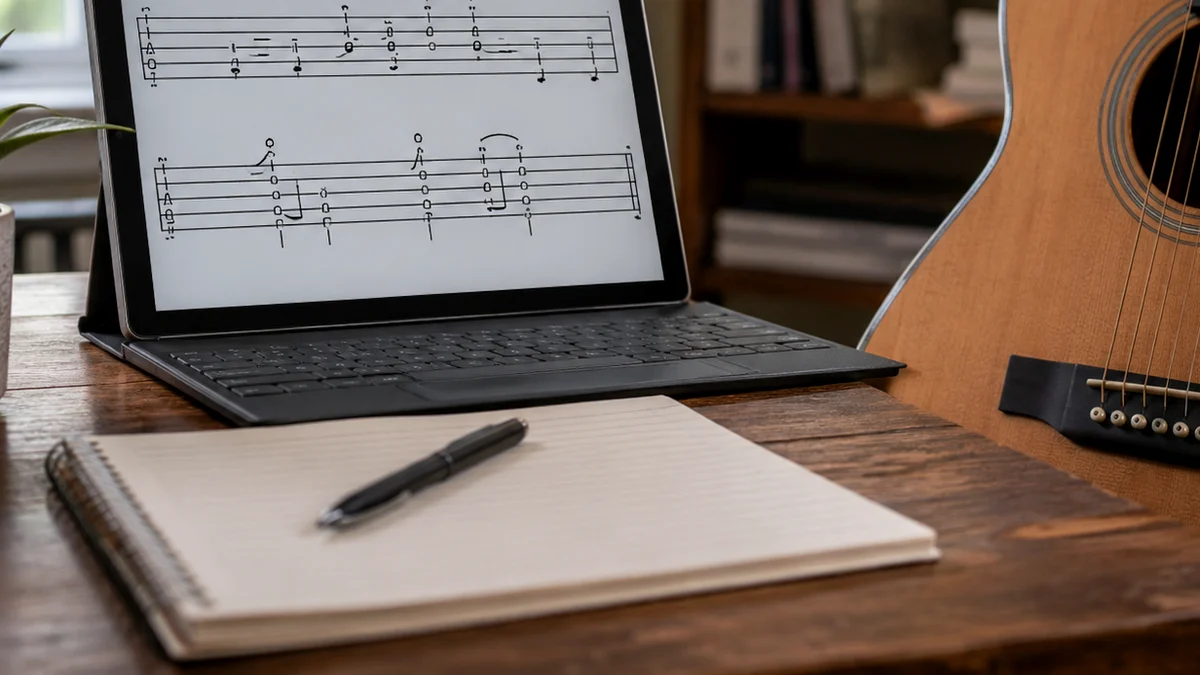
How Do You Play Chords in Open G?
Playing chords in Open G requires a shift in how you visualize the fretboard. Because the open strings are tuned to a G major triad (G, B, and D notes), any fret barred straight across all six strings will yield a major chord.
The One-Finger Major Chord
To play a major chord in Open G, you simply lay your index or middle finger flat across all six strings at a specific fret.
Here are common major-chord positions using this simple barre technique. These are not all diatonic chords in G major; the major I, IV, and V chords in that key are G, C, and D.
| Open G chord | Fret / shape |
|---|---|
| G major | Open strings |
| A major | Barre all strings at 2nd fret |
| B major | Barre all strings at 4th fret |
| C major | Barre all strings at 5th fret |
| D major | Barre all strings at 7th fret |
| E major | Barre all strings at 9th fret |
| F major | Barre all strings at 10th fret |
| G major octave | Barre all strings at 12th fret |
Using just these barre positions, you can play a standard I-IV-V blues or rock progression. For example, a progression in the key of G would use the open strings (G), the 5th fret barre (C), and the 7th fret barre (D).
Playing Minor Chords in Open G
Because the open strings form a major chord, playing minor chords requires a bit more finger work. To turn a major chord into a minor chord, you must locate the major third interval and lower it by one half-step (one fret).
In Open G, the major third of the scale is located on the second string (B). Therefore, to play minor chords, you cannot simply barre straight across the fretboard. You must adjust your fingering on the second string.
Here are a few essential minor chord shapes to get you started:
A Minor (Am)
To play an A minor chord, you can use this simple shape. It leaves the low D string unplayed or muted:
- String 6 (D): Mute or do not play
- String 5 (G): Fret at the 2nd fret, starting a partial barre with your ring finger
- String 4 (D): Fret at the 2nd fret with the same ring-finger barre
- String 3 (G): Fret at the 2nd fret with the same ring-finger barre
- String 2 (B): Fret at the 1st fret (with your index finger)
- String 1 (D): Fret at the 2nd fret with your middle finger for E. Leaving D open adds an extra fourth, so use fret 2 for a plain Am triad.
E Minor (Em)
The E minor chord is highly common in folk music. Here is a resonant way to play it:
- String 6 (D): Fret at the 2nd fret
- String 5 (G): Leave open
- String 4 (D): Fret at the 2nd fret
- String 3 (G): Leave open
- String 2 (B): Leave open for B. Fret 1 adds C, which is not part of an Em triad.
- String 1 (D): Fret at the 2nd fret
A Two-Note Hammer-On Embellishment
Try this Open G rhythm exercise around a five-string C major barre. It adds two color notes, rather than making a plain Csus4 chord.
Barre strings 5 through 1 at fret 5 and mute string 6. Hammer onto string 4 at fret 7 (A) and string 2 at fret 6 (F), leaving the other notes at fret 5. The sounding notes are C, A, C, F, and G: an Fadd9/C voicing that resolves back to C when you lift the two added fingers.
D|---5---| (Barred with index)
B|---6---| (Fretted with middle finger)
G|---5---| (Barred with index)
D|---7---| (Fretted with ring finger)
G|---5---| (Barred with index)
D|---x---| (Muted low sixth string)
Practice alternating the two shapes slowly, keeping the low sixth string muted. Compare that movement with a plain barre chord so you can hear which notes change.
Open G Tuning for Slide Guitar
If you have ever wanted to learn slide guitar, Open G is the perfect place to start. Because the strings are tuned to a major chord, any time you place your slide flat across the strings, you will play a clean chord in perfect pitch.
Slide Placement and Technique
When playing with a slide, you must abandon standard fretting rules. Instead of pressing the string down behind the fret wire, you must place the slide directly over the metal fret wire.
- No Pressure: Do not press the strings down to the wood of the fretboard. The slide should rest lightly on top of the strings. If you press too hard, the strings will clatter against the frets, creating an unpleasant metallic buzzing.
- Behind-the-Slide Muting: To get a clean slide tone, you must rest your index finger (or any fingers behind the slide) lightly across the strings. This dampens the unwanted vibrations occurring behind the slide, leaving you with a clear, singing note.
- Vibrato: To create a vocal-like vibrato, gently shake your hand back and forth over the target fret wire. Keep the movement small and even.
Finding Your Target Notes
When using a slide in Open G, you can easily find your target chords by looking at the fret markers:
- The Blues Turnaround: Slide up to the 12th fret for your octave G, drop to the 7th fret for your D chord, and down to the 5th fret for your C chord.
- Melody Lines: The 1st and 3rd strings are tuned to D and G respectively. This means you can easily play simple blues melodies by sliding up and down these two strings, using the open strings as a rhythmic drone.
What Songs Use Open G Tuning?
To truly understand the power of this tuning, it helps to study the songs that made it famous. Here are a few essential tracks to add to your listening and practice list:
1. "Start Me Up" by The Rolling Stones
This is the definitive Open G rock song. Keith Richards plays this riff on his five-string Telecaster. The main riff relies entirely on the contrast between the open G chord and the sus4 hammer-on shape described earlier.
2. "Walking Blues" by Robert Johnson (and Muddy Waters)
A masterclass in Delta blues slide guitar tuning. The song features a driving, rhythmic bass line played with the thumb on the lower strings, while the slide screams out vocal-style answers on the high strings.
3. "In My Time of Dying" by Led Zeppelin
Jimmy Page utilized Open G on an acoustic and electric slide guitar to create one of Led Zeppelin's heaviest tracks. The slide riffs are aggressive, utilizing the lower strings to create a strong wall of sound.
4. "Romeo and Juliet" by Dire Straits
Mark Knopfler used a variation of Open G (often tuned with a capo on the second fret to put it in the key of A) to play the iconic, fingerpicked resonator guitar intro to this classic ballad. The tuning allows for beautiful, cascading arpeggios that would be incredibly difficult to stretch for in standard tuning.
Common Mistakes When Tuning and Playing in Open G
Even experienced guitarists can run into trouble when first exploring alternative tunings. Keep these common pitfalls in mind to avoid frustration:
1. Tuning Up Instead of Down
When adjusting your strings to Open G, always tune down from standard tuning.
- Do not attempt to tune your 5th string (A) up to a high G; you will put too much tension on the string, which can cause it to snap or put unnecessary stress on your guitar neck.
- Always lower the pitch to reach your target notes.
2. Neglecting the Low D String
Because the root note of your G chord is on the 5th string, the low 6th string (tuned to D) acts as the fifth interval of the chord. If you strum the low D too heavily, it can make your G major chords sound muddy or inverted.
Try to focus your strumming attack on the 5th string down, or practice muting the 6th string with the tip of your thumb when you want a cleaner, punchier G chord.
3. Using Too Much Pressure with the Slide
If you are transitioning from regular fretting to slide play, your muscle memory will tell you to press down hard. This will cause the slide to hit the frets, resulting in a harsh, out-of-tune sound. Focus on keeping your fretting hand completely relaxed, letting the weight of the slide do the work.
4. Forgetting to Re-Check Your Tuning
As mentioned, changing the tension on three strings will cause the neck of your guitar to shift slightly. After you tune all six strings to D-G-D-G-B-D, go back and check each string a second time. You will likely find that the first few strings you tuned have drifted slightly out of pitch.
Next Steps on Your Open G learning process
Open G tuning is not just a tool for playing classic rock covers; it is an entirely new way to look at your instrument. It encourages you to break out of your physical ruts, listen to the natural resonance of the wood, and play with a renewed sense of curiosity.
Start by retuning your guitar, getting it perfectly in pitch, and spending fifteen minutes just strumming the open strings. Listen to how long the notes sustain.
Once you are comfortable, try sliding a single finger up to the 5th and 7th frets to play a simple chord progression. From there, grab a slide, explore the blues, and let your ears guide you to new musical ideas.
Related Chords.me Guides
For the next step, read Drop C Tuning Guide: Notes, Setup, and Common Mistakes, Chromatic Tuner Guitar Guide: How to Tune Accurately as a Beginner, and Major vs Minor Keys: Guitar Guide before moving on. You can also transpose the same chord idea in another key, find easier shapes with the Capo Calculator, and check each string with the guitar tuner while practicing this lesson.
Practice This With Chords.me
Use the Guitar Tuner to check each string slowly before practicing the example. If you want to move an Open G idea into a different key for a singer, try the Chord Transposer. Focus on clean notes and steady timing before increasing speed.
Frequently Asked Questions
What is Open G tuning?
Open G tuning is a guitar tuning where the strings are tuned D-G-D-G-B-D from low to high. The open strings form a G major chord.
What are the notes in Open G tuning?
The notes in Open G tuning are D, G, D, G, B, and D. The 6th, 5th, and 1st strings are tuned down from standard tuning.
Is DGDGBD Open G tuning?
Yes. DGDGBD is the common six-string Open G tuning. Some players remove or mute the low 6th string and use G-D-G-B-D for a tighter five-string Open G sound.
What chords work in Open G tuning?
Straight barre shapes give you major chords: open strings are G, 5th fret is C, 7th fret is D, and 12th fret is G again. Minor chords need adjusted shapes because the open tuning is major by default.
What is Open G tuning good for?
Open G tuning is good for blues, slide guitar, folk fingerstyle, one-finger major chords, and classic rock rhythm guitar. It is especially useful when you want ringing open strings and easy I-IV-V chord movement.
About the Contributor
Chords.me Tuning & Setup Desk Tuning, strings, and setup contributor
A brand contributor profile for Chords.me tuning and setup content. This desk focuses on tuning accuracy, string choice, fret buzz, intonation, action, and maintenance topics for everyday players. Content is checked for practical clarity, beginner readability, and accurate links to relevant Chords.me tools.