Capo vs Barre Chords: Which Should You Use?
Compare capo use and barre chords for guitar, including tone, difficulty, key changes, and when each method works best.
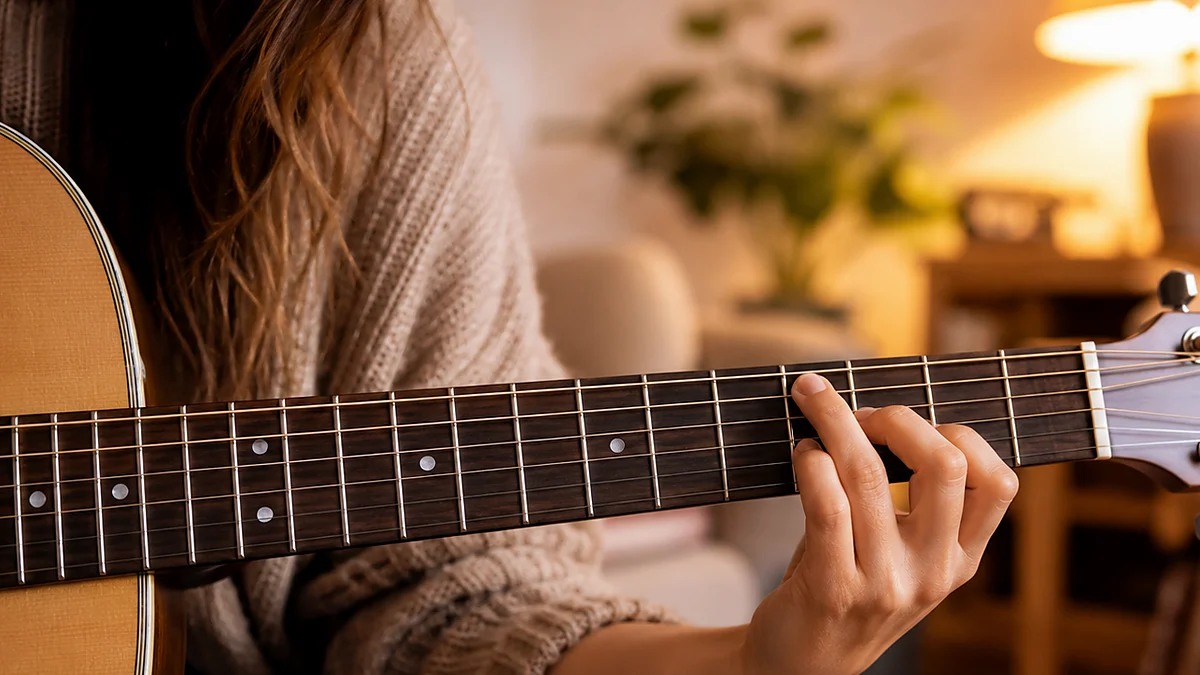
You are practicing a new song, and the chord sheet suddenly calls for an F minor, a Bb, or a C# minor. For many developing guitarists, this moment brings a familiar sense of hesitation. You have two primary paths to take: clamp a mechanical capo onto the neck and use familiar open shapes, or press your index finger flat across the fretboard to play a barre chord.
This choice is not just about avoiding difficult finger shapes. It impacts your tone, your physical endurance, and how you navigate the fretboard. To understand how to approach this dilemma, it helps to weigh the practical differences between these two fundamental methods of playing.
The Quick Answer: Capo vs. Barre Chords
If you need a fast way to decide which method to use for a specific song, here is a direct comparison of the two approaches:
- A capo is a mechanical tool clamped onto the guitar neck to raise the pitch of the open strings. It allows you to play in different keys using familiar, easy-to-press open chord shapes. It preserves the ringing, resonant tone of open strings and reduces hand strain.
- A barre chord is a finger technique where your index finger acts as a "human capo," pressing down multiple strings across a single fret while your remaining fingers fret a chord shape ahead of it. This technique allows you to play any chord anywhere on the neck without extra gear, offering instant key changes and superior control over string muting.
| Feature | Capo | Barre Chords |
|---|---|---|
| Primary Benefit | Maximum resonance, easy open shapes, low hand strain | Total fretboard freedom, instant key changes, rhythmic muting |
| Learning Curve | Instant (minutes to learn how to clamp it on) | High (weeks or months to build finger strength) |
| Tone Quality | Bright, ringing, chime-like, high sustain | Warm, focused, punchy, easily muted |
| Physical Effort | Very low; prevents hand fatigue | High; requires grip strength and thumb placement |
| Best Genres | Folk, bluegrass, acoustic singer-songwriter, indie | Rock, funk, jazz, blues, metal |
The Physics of the Fretboard: How Both Methods Work
To make an informed decision between capo versus barre chords, you must understand what is happening to your guitar's scale length when you use either method.
On an open guitar, the nut controls the vibrating length of the strings. When you play open chord shapes like G major, C major, or E minor, the un-fretted strings vibrate all the way from the bridge to the nut. This long vibrating distance gives open chords their characteristic deep sustain and bright resonance.
How a Capo Alters the Instrument
When you attach a capo, you are physically moving the nut down the fretboard. Clamping a capo at the third fret shortens the active portion of the strings. Now, when you play an open G major shape, the guitar sounds in the key of Bb major.
Because the capo is made of hard metal, plastic, or rubber, it mimics the dense material of the original bone or plastic nut. This means your "new" open strings retain almost all of their bright, ringing sustain.
How a Barre Chord Alters the Instrument
When you play a barre chord, your index finger becomes a movable nut. To play a G major barre chord at the third fret (using the E-shape barre), your index finger bars all six strings at the third fret, while your other fingers lay down the shape of an open E major chord.
Because human flesh is softer than a bone nut or a metal capo, your barring finger absorbs some of the string's vibrational energy. This alters the tone, making barre chords sound warmer, rounder, and slightly less resonant than chords played with a capo.
Tone, Comfort, and Portability: A Detailed Breakdown
Choosing between these two approaches requires looking at how they perform under real-world playing conditions. Let's analyze the key factors that influence a working guitarist's choice.
1. Sonic Character and Tone
The sonic difference between open chord shapes (accessed via a capo) and barre chords is significant.
Open chords naturally ring out longer because the strings vibrate against the nut or the hard fret wire under a capo. This creates a chime-like, airy quality that is highly prized in acoustic music. The open strings can ring into one another, creating a smooth wall of sound.
Barre chords have a tighter, more focused sound. Because your fingers are holding down every single note, you have complete control over when the notes stop vibrating. If you release the pressure of your fretting hand slightly, the sound stops instantly. This makes barre chords the preferred choice for rhythmic genres like funk, reggae, and rock, where sharp, staccato attacks and percussive "scratches" are essential.
2. Hand Fatigue and Physical Strain
For beginners and intermediate players, barre chords vs capo difficulty is often a matter of physical endurance.
Playing a three-minute song filled entirely with barre chords requires significant finger strength and endurance. If your guitar's action (string height) is high, or if you are playing an acoustic guitar with heavy-gauge strings, you will quickly experience hand fatigue. The muscles at the base of your thumb can cramp, leading to buzzing notes and sloppy transitions.
Using a capo is an excellent capo alternative to barre chords when you need to play a long setlist or when your hands are tired. It handles the heavy lifting of pressing down the strings, allowing your fretting hand to remain relaxed. This is particularly helpful during long practice sessions or multi-hour gigs.
3. Fretboard Versatility and Key Changes
While a capo is incredibly convenient, it limits your immediate movement. Once a capo is clamped at the 2nd fret, you are locked into that position unless you stop playing to move it. If a song modulates up a half-step during the final chorus, moving a capo mid-song without interrupting the rhythm is incredibly difficult.
Barre chords offer total fretboard freedom. Because your hand is the capo, you can shift keys instantly. If you need to modulate from G major to Ab major, you simply slide your entire barre chord shape up one fret. You do not need to stop, reach into your pocket, or adjust a mechanical clamp.
Is Using a Capo "Cheating" on the Guitar?
One of the most common questions guitar teachers hear is: is a capo cheating instead of barre chords?
The short answer is absolutely not. This misconception usually stems from beginner guitarists who use a capo exclusively to avoid learning how to barre. While avoiding barre chords forever will stunt your growth as an intermediate player, using a capo is a legitimate artistic and professional choice.
Do Professional Guitarists Use Capos?
If you wonder, do professional guitarists prefer capo or barre chords, the answer is that they use both, depending entirely on the musical context.
Consider some of the most famous guitar parts in music history:
- Keith Richards (The Rolling Stones): Used capos constantly to create his signature driving, open-tuned riffs on songs like "Start Me Up" and "Tumbling Dice."
- Johnny Marr (The Smiths): Frequently capoed his guitar up to the second fret to match Morrissey’s vocal range and to create bright, jangly, complex arpeggios that would be physically impossible to play using barre chords.
- Tommy Emmanuel: The legendary fingerstyle master uses capos to change the pitch and tension of his acoustic guitar, allowing his intricate arrangements to ring out with maximum sustain.
For these players, the capo is not a crutch to avoid difficult chords. It is a creative tool used to access specific chord voicings, open-string drones, and tonal colors that cannot be replicated with barre chords.
When to Use a Capo Instead of Barre Chords
There are specific musical scenarios where choosing a capo over a barre chord is clearly the better option.
1. Matching a Singer's Vocal Range
If you are accompanying a vocalist (or singing yourself), you often need to change the musical key of a song to fit a specific vocal range. If a song is originally written in C major, but the singer needs it in Eb major to hit the high notes comfortably, you have two choices:
- Transpose all the chords in your head and play them as barre chords (Eb, Ab, Bb, Cm).
- Put a capo on the 3rd fret and play the easy, familiar open shapes of C, F, G, and Am.
Using a capo in this situation keeps your chord shapes simple, allowing you to focus on your vocal performance, strumming dynamics, and stage presence. If you need help figuring out which fret to place your capo on to match a specific key, you can use the online Guitar Capo Calculator on Chords.me to instantly find the correct fret and chord shapes.
2. Achieving Maximum Acoustic Resonance
If you are playing solo acoustic guitar, you want the instrument to sound as full and orchestral as possible. Open string notes have a deep, rich low-end and a sparkling high-end.
By using a capo, you can play in difficult keys like F# minor or C# major while still utilizing open strings that ring out beneath your melodies. Playing those same keys using only barre chords can result in a dry, dark, and punchy sound that lacks the lush atmosphere needed for acoustic performances.
3. Utilizing Specific Fingerstyle Patterns
Many fingerstyle arrangements rely on "drone" notes—open strings that continue to ring while you play a melody on the higher strings. If you try to play these arrangements using barre chords, your index finger will constantly block and mute those ringing open strings, destroying the flow of the arrangement.
When to Master and Use Barre Chords
Despite the convenience of the capo, every serious guitarist must invest the time to master barre chords. Relying solely on a capo will limit your musical development and restrict your ability to play with other musicians.
1. Playing Electric Guitar in a Band
If you play electric guitar in a rock, funk, blues, or jazz band, barre chords are your primary tool.
Electric guitars are highly sensitive to feedback and string noise. Because barre chords are held entirely by your fingers, you can instantly mute the strings by relaxing your fretting hand. This allows you to play tight, rhythmic patterns without unwanted strings ringing out through a loud amplifier.
Additionally, using a capo on an electric guitar with high gain or distortion can sometimes cause tuning instability and make the higher frets difficult to access.
2. Navigating Complex Chord Progressions
In genres like jazz or neo-soul, chord progressions change keys rapidly. A single song might move through three different keys in the span of thirty seconds.
In these environments, a capo is useless. You must rely on your knowledge of barre chord shapes and movable voicings to navigate the fretboard smoothly. Barre chords allow you to keep your hand in one general area of the neck while changing chords, rather than jumping wild distances up and down the fretboard.
3. Developing Finger Strength and Fretboard Knowledge
Learning barre chords is a rite of passage. The process of mastering them builds the necessary finger strength, dexterity, and calluses that you need for advanced techniques like string bending, vibrato, and fingerstyle soloing.
Furthermore, learning how barre chords are built helps you understand the relationship between different keys and root notes on the neck. It demystifies the fretboard, turning it from a confusing grid of frets into a logical, easily navigable map.
Making the Decision: Capo vs. Barre Chords for Beginners
If you are early in your guitar practice, you might wonder: is it better to use a capo or learn barre chords first?
The best approach is a balanced one.
When you are starting out, your primary goal is to have fun, build rhythm, and play songs. If a song you love has one or two difficult barre chords, using a capo as a temporary capo alternative to barre chords is a smart way to keep your momentum going. It prevents frustration and allows you to practice your strumming and timing without getting stuck on a single difficult chord.
However, you should dedicate 10 to 15 minutes of every practice session to building your barre chord technique.
Start by practicing the "half-barre" (barring just two or three strings), then gradually work your way up to the full six-string F major chord. By balancing the immediate playability of the capo with the long-term discipline of learning barre chords, you will develop into a versatile, well-rounded guitarist.
Summary of Best Practices
To help you decide which tool to reach for during your next practice session or gig, keep these practical guidelines in mind:
- Reach for the capo when you are playing acoustic guitar, accompanying a singer, writing folk/bluegrass music, or when you want to maximize the ringing sustain of your open strings.
- Reach for barre chords when you are playing electric guitar, performing in a band, playing rhythmic styles like funk or reggae, or navigating complex jazz progressions that require instant key changes.
- Do not view the capo as a crutch. It is an artistic choice used by some of the greatest guitarists in history to create unique sonic textures.
- Do not avoid barre chords. They are the key to learning the entire fretboard and building the hand strength required for advanced guitar playing.
By understanding the strengths and limitations of both approaches, you can choose the right tool for the job, ensuring your playing always sounds clean, professional, and musically appropriate.
Related Chords.me Guides
For the next step, read Major vs Minor Keys: Guitar Guide, Guitar Capo FAQs: Common Beginner Questions, and Chords and Lyrics Formatting Guide before moving on. You can also test the same idea in another key and compare capo positions while practicing this lesson.
Practice This With Chords.me
Use the Guitar Capo Calculator to test the fret position, then compare the result with the Chord Transposer. Focus on clean notes and steady timing before increasing speed.
Frequently Asked Questions
Is using a capo considered cheating?
No, using a capo is not cheating. It is a standard tool that many professional guitarists use to change keys or use chord voicings that would otherwise require barre chords.
Are barre chords harder than using a capo?
Yes, barre chords generally require more finger strength and practice than using a capo, which is why many players reach for a capo instead of a barre chord in certain keys.
Do professional guitarists use capos?
Yes, many professional guitarists regularly use capos to change keys while keeping familiar chord shapes and voicings.
About the Contributor
Chords.me Tuning & Setup Desk Tuning, strings, and setup contributor
A brand contributor profile for Chords.me tuning and setup content. This desk focuses on tuning accuracy, string choice, fret buzz, intonation, action, and maintenance topics for everyday players. Content is checked for practical clarity, beginner readability, and accurate links to relevant Chords.me tools.