What Is BPM? A Beginner’s Guide to Beats Per Minute in Music
Understand BPM in music, how beats per minute affects tempo, and how guitarists can find and use BPM when practicing.
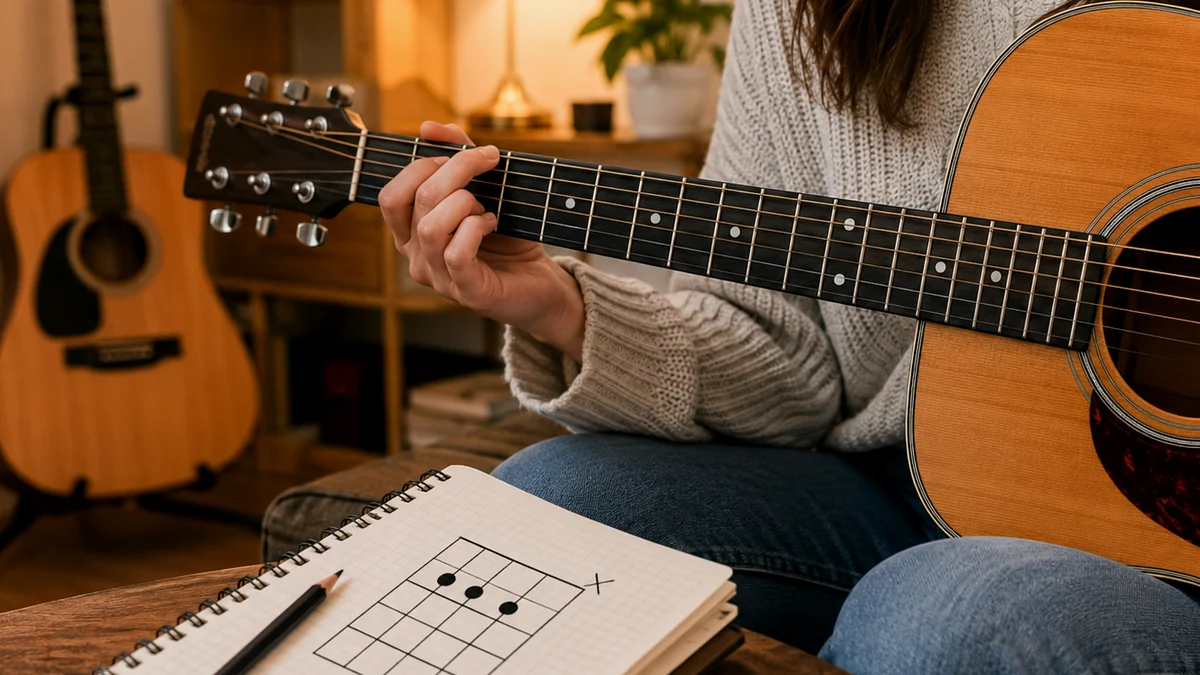
If you have ever sat down with a guitar, tapped your foot to a favorite song, or watched a drummer count in a band with a loud "1, 2, 3, 4!", you have already experienced the foundational heartbeat of music. That heartbeat has a specific name and a precise measurement. It is called BPM.
For anyone starting their musical development, understanding this concept is essential. It affects how you practice, how you perform with other musicians, and how you record your songs.
Here is a straightforward explanation of what BPM stands for and what it means for your playing.
BPM Definition BPM stands for Beats Per Minute. It is the standard numerical unit used to measure the tempo, or speed, of a piece of music. One beat per minute means one steady pulse occurs every sixty seconds. A tempo of 120 BPM means there are exactly 120 beats (or two beats every single second) pulsing through the music.
What Does BPM Stand For in Music?
To understand the definition of BPM, we must first look at what a "beat" actually is. In music, the beat is the steady, underlying pulse that makes you want to tap your foot, clap your hands, or dance. It is the constant unit of time that divides a song into regular intervals.
When we talk about the beats per minute meaning, we are looking at a mathematical way to count these pulses over a specific timeframe. If you set a timer for one minute and clap sixty times at a perfectly even pace, you are clapping at 60 BPM. If you double that speed and clap 120 times in the same sixty seconds, you are playing at 120 BPM.
In modern music production and performance, what does BPM stand for in music besides a simple number? It stands for structure. It is the grid upon which all instruments—guitars, bass, drums, vocals, and keyboards—align. Without this shared grid, a band would quickly fall out of sync, with each player drifting at their own preferred speed.
Is BPM the Same as Tempo?
Beginner musicians often ask: is BPM the same as tempo? Or more specifically, how is BPM different from tempo?
While people often use these terms interchangeably in casual conversation, there is a subtle and important difference.
- Tempo is the broad, abstract concept of the speed of a piece of music. It is a qualitative term. You might describe a song's tempo as "slow," "moderate," "brisk," or "blazing fast."
- BPM is the precise, quantitative measurement of that tempo. It is a specific number.
To use an everyday analogy, think of weather. "Tempo" is like saying the weather is "hot," "warm," or "freezing." "BPM" is like reading the exact temperature on a thermometer, such as 72°F or 32°F.
If a band leader tells you to play a song with a "fast tempo," that instruction is open to interpretation. To a metal guitarist, "fast" might mean 180 BPM. To a blues guitarist, "fast" might mean 130 BPM. However, if the band leader says, "Let's play this song at exactly 110 BPM," there is no room for confusion. Every musician in the room knows the exact speed required.
The Anatomy of a Beat: How to Feel the Pulse
Before you can master playing at different speeds, you need to learn how to feel the pulse of a song. This is a physical skill as much as an intellectual one.
Most popular music is written in a time signature called 4/4 time (also known as "common time"). In 4/4 time, music is grouped into measures (or bars), and each measure contains four beats.
To feel this in action:
- Turn on a rock or pop song that has a clear, driving drum beat.
- Listen for the heavy thud of the bass drum and the sharp snap of the snare drum.
- Start tapping your foot to that steady pulse.
- Count out loud: "1, 2, 3, 4, 1, 2, 3, 4."
Each number you count represents one beat. The speed at which those numbers pass by is the BPM. If those four beats repeat thirty times in the span of one minute, you are listening to a song at 120 BPM (30 measures multiplied by 4 beats equals 120 total beats).
Italian Tempo Markings vs. Modern BPM
Long before digital metronomes, recording software, and smart devices existed, classical composers needed a way to tell musicians how fast to play their pieces. Because the exact measurement of beats per minute was not widely available until the invention of the mechanical metronome in the early 19th century, composers relied on Italian words to describe the mood and speed of the music.
These classical terms are called tempo markings. While they do not represent an exact, rigid number like a digital metronome marking, they do represent specific ranges of speed.
If you look at classical sheet music, you will still see these terms today. Understanding how these terms translate to modern BPM ranges is highly beneficial, even if you primarily play modern styles like rock, blues, or fingerstyle guitar.
| Tempo Marking | BPM Range | Musical Feel / Description | Common Genre Examples |
|---|---|---|---|
| Largo | 40 – 60 BPM | Very slow, broad, and solemn | Doom metal, ambient soundscapes, funeral marches |
| Adagio | 66 – 76 BPM | Slow, leisurely, and expressive | Slow indie ballads, classic soul, deep blues |
| Andante | 76 – 108 BPM | At a walking pace, moderate | Acoustic folk, classic rock ballads, lo-fi hip-hop |
| Moderato | 108 – 120 BPM | Moderately, comfortably neutral | Mid-tempo pop, alternative rock, country |
| Allegro | 120 – 168 BPM | Fast, cheerful, and lively | Punk rock, dance-pop, classic heavy metal |
| Presto | 168 – 200+ BPM | Extremely fast, rapid | Thrash metal, bluegrass flatpicking, bebop jazz |
As you can see, terms like andante and allegro provide a general vibe and speed range, whereas a modern metronome marking gives you an exact numerical target. If you are practicing a classical piece arranged for classical guitar, you might see "Andante" written at the top of the page, sometimes accompanied by a specific metronome marking like ♩ = 92. This tells you that the quarter note (the beat) should be played at exactly 92 BPM.
What BPM is Considered Fast or Slow
When exploring BPM explained for musicians, beginners often wonder: what BPM is considered fast or slow?
Because human perception of speed is relative, there is no single rule. However, we can categorize general speed zones based on how our bodies naturally react to the rhythm.
The Slow Zone (40 – 75 BPM)
At this speed, the gaps between the beats are wide. It requires excellent control to play instruments in this zone because it is easy to rush and play ahead of the beat. Songs in this range often feel heavy, emotional, relaxed, or cinematic.
The Moderate Zone (76 – 120 BPM)
This is the "walking pace" zone. Most popular music lives here. It feels natural to the human heart rate and is highly danceable. If you are wondering what is a good BPM for a song that needs to appeal to a wide audience, this mid-tempo range is usually the safest bet.
The Fast Zone (121 – 160 BPM)
This is where the energy rises. Your foot taps rapidly, and your body wants to move. This zone is common in high-energy rock, punk, electronic dance music, and upbeat country.
The Extreme Zone (161 – 200+ BPM)
At this speed, the notes fly by quickly. This range requires high technical precision, especially for guitarists executing fast alternate picking, sweep picking, or rapid strumming patterns.
Why BPM Matters to Guitarists and Musicians
Whether you want to play acoustic campfire songs or shred electric guitar solos, BPM is a concept you will interact with constantly. Here are the primary reasons why beats per minute matters to your daily musical life.
1. Developing Rock-Solid Timing
The difference between an amateur guitarist and a professional guitarist rarely lies in how many complex chords they know. It lies in their timing. A professional can play a simple two-chord progression with absolute, unwavering rhythmic consistency.
By practicing with a metronome set to a specific BPM, you train your internal clock. You learn to stop rushing (speeding up because of excitement or tension) and dragging (slowing down because a passage is physically difficult to play).
2. Measuring Your Technical Progress
If you are learning a challenging guitar solo, a fast scale run, or a complex fingerstyle pattern, you cannot expect to play it at full speed on day one.
A professional practice method involves:
- Finding the target speed of the song (for example, 120 BPM).
- Slowing the pattern down to a speed where you can play it perfectly without mistakes (perhaps 60 BPM).
- Practicing at that slow speed until it feels effortless.
- Gradually raising the metronome speed by 5 BPM at a time (65, 70, 75.) until you reach your target speed.
This systematic approach prevents you from practicing mistakes and builds clean, reliable muscle memory.
3. Recording in a Digital Audio Workstation (DAW)
If you ever record your guitar playing using a computer program like GarageBand, Reaper, Logic, or Pro Tools, the first thing the software will ask you to do is set the project's BPM.
Once you set the BPM, the software generates a click track (a digital metronome) and aligns a visual grid on your screen. When you record your guitar parts to this click track, editing your tracks, copying and pasting choruses, adding digital drums, and sharing your files with other musicians becomes incredibly simple because everything aligns perfectly to the exact same grid.
4. Syncing Time-Based Effects
For electric guitarists, your effects pedals often rely on the speed of the song. If you use a delay pedal (which creates echoes) or a tremolo pedal (which creates a pulsating volume effect), these effects need to sync with the song's tempo.
If your delay pedal repeats are set to a different speed than the drummer's beat, your sound will quickly turn into a chaotic, messy echo. Many modern multi-effects units and delay pedals allow you to type in a specific BPM or use a "tap tempo" footswitch to match the exact tempo of the band.
How to Find and Measure BPM
Now that you understand what BPM is and why it matters, how do you actually find the BPM of a song you are listening to, or set the BPM for a song you are writing?
1. Using a Tap BPM Tool
If you are listening to a track and want to know its exact speed, you do not have to guess or do complex math. The easiest method is to use a dedicated online utility.
For instance, you can open the Chords.me Tap BPM Finder. As you listen to the music, simply tap your spacebar, mouse button, or phone screen in time with the beat. The tool measures the average time between your taps and instantly displays the exact BPM of the song. This is highly useful for transcribing music, preparing backing tracks, or figuring out how fast you need to practice a specific cover song.
2. Using a Metronome
A metronome is a device that produces a steady, audible click at a set BPM. You can use a traditional mechanical metronome with a swinging pendulum, a pocket electronic metronome, or one of the hundreds of free metronome apps available for your smartphone. You simply dial in the number you want (such as 95 BPM), press start, and play along with the clicks.
3. The Manual Calculation Method
If you do not have access to a digital tool, you can calculate BPM manually using a clock with a second hand:
- Start playing the song and find the steady pulse.
- Look at the clock and count how many beats occur in exactly 15 seconds.
- Multiply that number by 4 to get the total number of beats in 60 seconds.
For example, if you count 25 beats in 15 seconds, you multiply 25 by 4, which gives you 100 BPM. While this manual method is not as precise as a digital tap tool, it gives you a quick, reliable estimate.
Common Rhythm Obstacles and How to Overcome Them
As a guitar practice guide, I see students struggle with tempo and timing constantly. It is completely normal. Playing an instrument requires you to coordinate your hands, read music or tabs, and think about chord shapes all at once. When your brain is busy with those tasks, your sense of time is often the first thing to slip.
Here are three common rhythm mistakes and how to fix them:
Mistake 1: Rushing the Easy Parts and Dragging the Hard Parts
When a song gets easy (like a simple strummed chorus), musicians naturally tend to speed up because they feel relaxed. When the song gets difficult (like a fast chord change or a guitar solo), they slow down because their fingers need more time to move.
- The Fix: Practice the transition points specifically. Set your metronome to a slow, comfortable speed where you can execute the hardest part of the song perfectly. Do not speed up the metronome until the difficult section feels as easy and relaxed as the simple section.
Mistake 2: Playing "Just Behind" or "Just Ahead" of the Metronome
Some players hear the click of the metronome but treat it as a suggestion rather than a strict boundary. They end up playing consistently slightly faster or slightly slower than the click, creating a floating, unsettled feeling.
- The Fix: Try to make the metronome click "disappear." When your guitar note strikes at the exact microsecond of the metronome click, the sound of your instrument will briefly mask the sound of the click. This is called "burying the click." Practice playing single notes on your guitar, aiming to bury the click on every single beat.
Mistake 3: Practicing Too Fast, Too Soon
It is tempting to try playing your favorite song at its original recording speed right away. However, practicing at a speed where you are constantly stumbling, missing notes, or tensing up your hands only trains your muscles to play sloppily.
- The Fix: Respect the slow tempo. If a song is recorded at 130 BPM, start practicing it at 70 BPM. Only when you can play it perfectly ten times in a row should you increase the speed to 75 BPM. This disciplined approach is the fastest path to playing at high speeds with clarity and precision.
Developing Your Rhythmic Intuition
Ultimately, BPM is more than a sterile mathematical number on a screen. It is the framework that gives music its energy, its drive, and its emotional weight. By learning to identify, measure, and play along with different tempos, you change your guitar playing from a collection of disconnected notes into a cohesive, moving musical experience.
As you continue practicing, make the metronome your friend rather than an opponent. Use tools like the tap BPM finder on Chords.me to analyze your favorite tracks, study how different genres utilize speed to create their unique vibes, and always start your practice sessions slow. With time, patience, and consistent practice, your internal clock will become incredibly precise, allowing you to lock into any groove with confidence and ease.
Related Chords.me Guides
For the next step, read CAGED System Guitar Explained: Complete Beginner’s Guide to Fretboard Mast, Blues Scale Guitar Guide: Beginner Practice Guide, and Major Scale Guitar Guide: Beginner Practice Guide before moving on. You can also test the same idea in another key and keep practice timing steady with the tap tempo tool while practicing this lesson.
Practice This With Chords.me
Use the Tap Tempo to keep the exercise slow, steady, and repeatable. Focus on clean notes and steady timing before increasing speed.
Frequently Asked Questions
What is considered a fast BPM?
Tempos above roughly 120-140 BPM are generally considered fast, common in genres like dance, punk, and up-tempo pop.
Is BPM the same thing as tempo?
Yes, BPM (beats per minute) is simply the numeric measurement of a song's tempo, the speed at which it is played.
What BPM is most pop music?
Most mainstream pop music sits in a range of roughly 100-130 BPM, though it varies by subgenre and era.
About the Contributor
Chords.me Practice Tools Desk Practice workflow and music tools contributor
A brand contributor profile for Chords.me practice-tool guides. This desk focuses on timing, BPM, chord sheets, transposition, capo use, and ways to turn practice notes into usable playing routines. Content is checked for practical clarity, beginner readability, and accurate links to relevant Chords.me tools.