Pentatonic Scale Guitar Guide: Complete Beginner Guide
Pentatonic Scale Guitar Guide: Complete Beginner Guide: clear guitar guide with practical examples, common mistakes, and Chords.me practice tools.
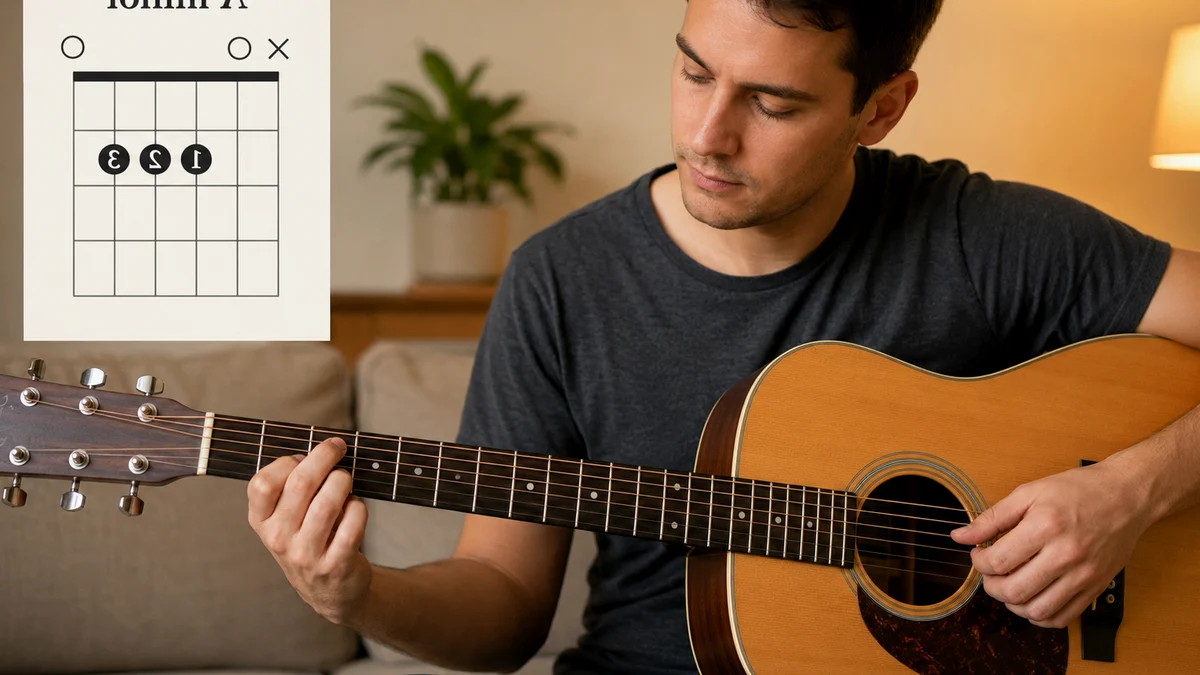
Imagine standing on stage, the band starting a deep blues groove, and it is time for your solo. You do not need to memorize hundreds of complex jazz scales or deep music theory books to sound strong. You only need five notes.
The pentatonic scale is the most widely used scale in modern music, forming the backbone of rock, blues, pop, country, and metal. By stripping away the most challenging intervals of the standard major and minor scales, it gives you a framework where almost every note you play sounds naturally pleasing. This guide will show you how to Learn This scale step by step, build your fretboard confidence, and start improvising with ease.
What is the Pentatonic Scale on Guitar? The pentatonic scale is a five-note musical scale used extensively in rock, blues, pop, and country music. By removing the two most dissonant intervals from a standard seven-note major or minor scale, it creates a highly versatile, easy-to-play framework that sounds great over almost any chord progression in its key.
How to Use the Pentatonic Scale on Guitar Correctly
- Identify the key center of the song or backing track you are playing over.
- Locate the root note of that key on the low E string of your guitar.
- Align your scale pattern (such as Position 1) with that root note.
- Play the notes in sequence to memorize the fretboard pattern and build muscle memory.
- Create short musical phrases (licks) using techniques like slides, bends, and vibrato rather than just running up and down the scale.
What is the Pentatonic Scale on Guitar?
To understand the pentatonic scale, it helps to look at the word itself. "Penta" comes from the Greek word for five, and "tonic" refers to tone or note. Therefore, a pentatonic scale is simply a five-note scale.
In western music, standard major and minor scales contain seven notes. While these seven-note scales are beautiful, they contain specific intervals that create intense tension. If you stop on one of these tense notes over the wrong chord, your playing can sound harsh or unresolved.
The pentatonic scale solves this problem by removing those tense intervals. By leaving only the most stable, harmonious intervals, it provides a safe zone for lead guitarists.
Is Pentatonic Scale Guitar Good for Beginners?
Yes, the pentatonic scale is the absolute best starting point for beginner guitarists who want to play lead. Because it lacks half-step intervals, it is incredibly forgiving. You can play almost any note in the scale over a matching backing track, and it will sound musically correct.
Learning this scale teaches you how to coordinate your fretting hand and picking hand. It introduces you to the concept of the fretboard pattern, which you can slide up and down the neck to play in different keys. Instead of getting bogged down in complex theory, you get to make real music almost immediately.
The Core Anatomy of the Pentatonic Scale
Before placing your fingers on the fretboard, you need to understand how this scale is constructed. The pentatonic scale comes in two primary flavors: major and minor. Both use five notes, but their intervals create entirely different emotional landscapes.
The Minor Pentatonic Scale
The minor pentatonic scale has a dark, bluesy, and aggressive sound. It is the foundation of classic rock solos and traditional blues. The scale degrees of the minor pentatonic scale are:
- Root Note (1): The home base note that names the key.
- Minor Third (b3): The note that gives the scale its sad, minor character.
- Perfect Fourth (4): A stable, melodic interval.
- Perfect Fifth (5): The strongest supporting note to the root.
- Minor Seventh (b7): The bluesy note that wants to resolve back to the root.
If you play these scale degrees starting on an A note, you get the notes: A, C, D, E, and G.
The Major Pentatonic Scale
The major pentatonic scale sounds bright, happy, sweet, and triumphant. You hear it constantly in country music, folk, and classic soul. The scale degrees of the major pentatonic scale are:
- Root Note (1): The tonal center.
- Major Second (2): A smooth, passing tone.
- Major Third (3): The note that gives the scale its bright, major character.
- Perfect Fifth (5): The bedrock interval.
- Major Sixth (6): A sweet-sounding interval that adds color.
If you play these scale degrees starting on a C note, you get the notes: C, D, E, G, and A.
Notice something interesting? The notes in the A minor pentatonic scale (A, C, D, E, G) are exactly the same as the notes in the C major pentatonic scale (C, D, E, G, A). They simply start on a different root note. This relationship is called the relative major and minor, and it means that once you learn one fretboard pattern, you are actually learning two scales at once.
How to Learn Pentatonic Scale Guitar Step by Step
Learning the pentatonic scale is not about memorizing the entire fretboard at once. It is about mastering one small shape, understanding its root notes, and gradually expanding your reach. Follow this step-by-step process to build a rock-solid foundation.
Step 1: Memorize Position 1 (The Box Shape)
The most famous scale pattern on the guitar is Position 1 of the minor pentatonic scale. It is often called the "box shape" because it spans four frets and fits perfectly under your hand without requiring you to shift your wrist up or down the neck.
We will learn this shape in the key of A minor. Place your hand at the 5th fret. Your index finger will handle all notes on the 5th fret, your ring finger will handle the 7th fret, and your pinky finger will handle the 8th fret.
Here is how to play it, starting from the thickest string (Low E) down to the thinnest string (High E):
- Low E String: 5th fret (index finger) to 8th fret (pinky finger)
- A String: 5th fret (index finger) to 7th fret (ring finger)
- D String: 5th fret (index finger) to 7th fret (ring finger)
- G String: 5th fret (index finger) to 7th fret (ring finger)
- B String: 5th fret (index finger) to 8th fret (pinky finger)
- High E String: 5th fret (index finger) to 8th fret (pinky finger)
Play this shape slowly upward (ascending) and then backward (descending). Use alternate picking (down-stroke, up-stroke, down-stroke, up-stroke) to build clean picking habits.
Step 2: Identify the Root Notes
Playing a scale pattern is useless if you do not know where your home base is. The root note is the anchor. When you end a musical phrase on a root note, it sounds complete and satisfying. If you end on a different note, it leaves the listener waiting for resolution.
In Position 1 of the A minor pentatonic scale, there are three root notes:
- The Low E String, 5th fret (The note A)
- The D String, 7th fret (The note A)
- The High E String, 5th fret (The note A)
As you practice running the scale, pause slightly on these root notes. Train your ears to recognize the sound of arriving "home."
Step 3: Practice with a Metronome
Playing fast is meaningless if you cannot play in time. Once your fingers know where to go, you must train your internal clock.
To make your practice sessions efficient, find a backing track or a simple rhythm loop. If you do not know the speed of the song you are practicing to, you can use the Chords.me Tap BPM finder. Simply tap along to the beat of the song on your phone or computer screen to instantly discover the exact tempo.
Once you have the tempo, set your metronome to that BPM. Practice playing one note per click (quarter notes), then two notes per click (eighth notes). Keep your movements small, relaxed, and perfectly locked in with the click.
Step 4: Connect with Other Patterns
While Position 1 is incredibly powerful, you do not want to get stuck in the box forever. The pentatonic scale actually covers the entire neck across five distinct positions. Each position connects to the next like puzzle pieces.
Once you can play Position 1 perfectly, look at the notes immediately above it. Position 2 starts where Position 1 ends. By learning how these shapes overlap, you can begin sliding horizontally up and down the neck, giving your solos a much wider dynamic range.
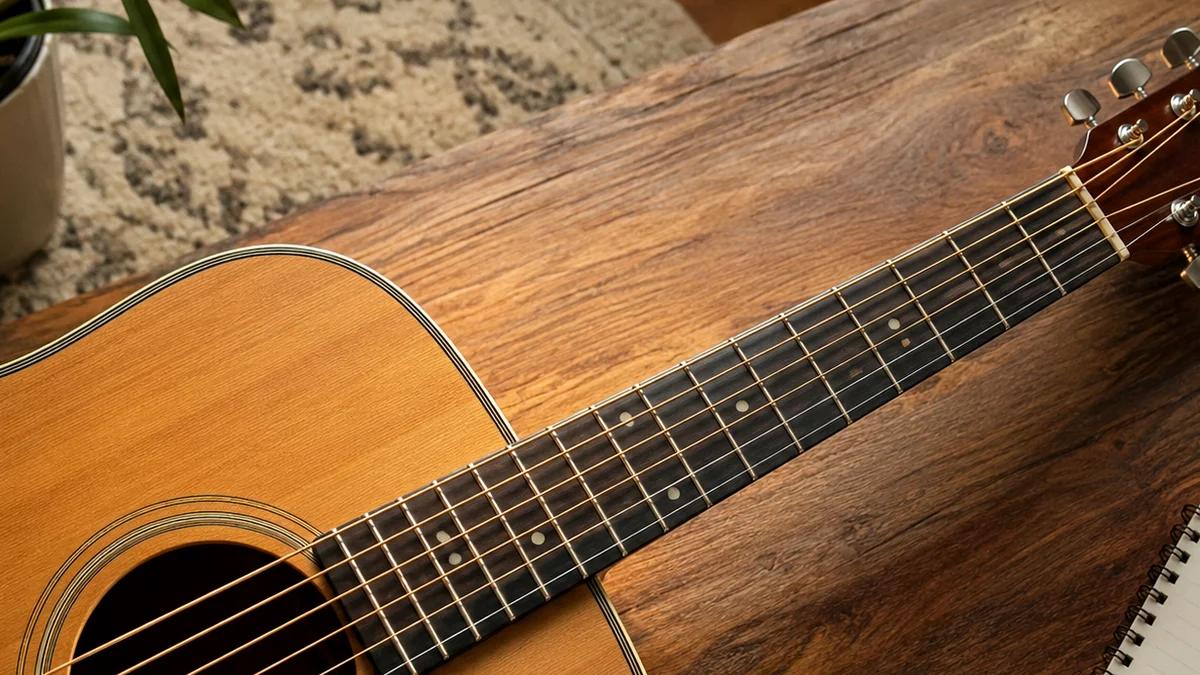
Practical Application: How Do You Use Pentatonic Scale Guitar?
Knowing the scale patterns is like knowing the alphabet. Now, you need to learn how to form words and sentences. Here is how you take those five notes and turn them into expressive music.
Improvising Over a Chord Progression
The easiest way to start improvising is to play over a 12-bar blues progression. If the song is a blues in the key of A, you can use the A minor pentatonic scale over the entire progression.
As the chords change from A minor to D minor and E minor, the notes of your scale will interact with the backing chords differently. You do not need to play constantly. Imagine you are speaking. Play a short phrase of three or four notes, then pause to let the music breathe. This pause allows the listener to digest your musical "sentence."
Writing Memorable Riffs
Many of the most famous guitar riffs in history are built directly from the pentatonic scale. Think of the opening riff to "My Girl" by The Temptations, "Sunshine of Your Love" by Cream, or "Whole Lotta Love" by Led Zeppelin.
To write your own riff, try choosing just three notes from Position 1. Play with the rhythm. Syncopate the notes by placing them slightly off the beat. Repeat the pattern, changing only the final note on the second pass. This call-and-response structure is the practical way to writing catchy hooks.
Transposing to Different Keys
One of the greatest features of the guitar is that its patterns are movable. If you learn Position 1 of the minor pentatonic scale on the 5th fret, you are playing in A minor.
If you want to play in G minor, you do not need to learn a new shape. You simply slide the entire pattern down two frets so your index finger starts on the 3rd fret (the note G). If you want to play in B minor, slide the pattern up to the 7th fret.
When playing with other musicians, they might want to change the key of a song to better fit a singer's vocal range. If you are reading a chord sheet and need to quickly shift the chords to match your new scale position, you can use the Chords.me chord transposer or capo calculator. These online tools help you instantly visualize the new chord shapes so you can keep your rhythm and lead playing perfectly aligned.
Essential Practice Methods and Routine
To master the pentatonic scale, you need a structured approach. Mindless repetition of the same pattern will lead to a plateau. Use this structured practice routine to build speed, accuracy, and musicality.
| Skill | Practice Method | Time Needed | Common Mistake |
|---|---|---|---|
| Scale Shape Memorization | Play Position 1 up and down using alternate picking. | 5-10 mins / day | Using only down-strokes or skipping fingers. |
| Rhythmic Precision | Play to a metronome using the Chords.me Tap BPM finder to match backing tracks. | 10 mins / day | Rushing ahead of the beat during easier transitions. |
| Root Note Targeting | Improvising phrases that always resolve on a root note. | 5 mins / day | Ending phrases on unresolved notes, sounding unfinished. |
| Phrasing & Expression | Apply slides, bends, and vibrato to single notes in the pattern. | 10 mins / day | Overusing techniques sloppily without control. |
Developing Your Daily Routine
Spend the first five minutes of your practice session warming up your hands. Play the scale slowly, focusing on clean tone and minimal finger movement. Your fingers should hover just millimeters above the fret wire when not pressing down.
Next, dedicate ten minutes to rhythm. Set a backing track, find the tempo, and practice playing simple rhythmic patterns. Try playing a note, skipping a beat, and then playing three notes in quick succession.
Finally, spend fifteen minutes on creative play. Turn off your analytical brain. Put on a backing track in your chosen key and try to express an emotion. Play slowly, play loudly, play softly, and focus on making every single note count.
Pentatonic Scale Guitar Mistakes Beginners Make
Even the most dedicated students can fall into bad habits that slow their progress. Recognizing these common pitfalls early will save you months of frustration.
1. Mindless Noodling
The most common mistake is running up and down the scale pattern like an exercise instead of making music. A scale is a palette of colors, not a song. If you only play the notes in sequential order, your solos will sound like a typing test. Break up the pattern. Skip strings. Play two notes, jump up a string, play one note, and slide back down.
2. The "Flying Fingers" Syndrome
Watch your fretting hand in a mirror. When you play a note with your index finger, does your pinky finger fly two inches away from the fretboard? This is called flying fingers. It wastes energy and makes fast playing impossible. Keep your fingers relaxed and curved, hovering close to the strings.
3. Ignoring the Key Center
If a backing track is in E minor, and you play the A minor pentatonic scale, it will sound terrible. You must always identify the key center before you start playing. Locate the root note of the song on your fretboard, align your pattern, and only then begin playing.
4. Neglecting the Pinky Finger
Position 1 of the minor pentatonic scale requires your pinky finger to play the notes on the low E, B, and high E strings. Many beginners try to stretch their ring finger to reach these notes because their pinky is weak. This ruins your hand posture and limits your speed. Force yourself to use your pinky from day one. It will feel weak at first, but with daily practice, it will develop the necessary strength and independence.
Elevating Your Lead Playing Beyond the Basics
Once you can play the scale shapes cleanly and in time, it is time to add expression. This is what separates a mechanical player from an expressive guitarist.
Bending Strings
Bends are the heart of blues and rock guitar. To perform a bend, place your ring finger on a note (the 7th fret of the G string is a perfect place to start). Place your middle and index fingers on the frets behind it to support the push. Push the string upward toward the ceiling, changing the pitch of the note.
The key to great bends is pitch accuracy. You want to bend the note until it matches the pitch of the note two frets higher. Practice playing the target note first, then try to bend up to match that exact pitch.
Adding Vibrato
Vibrato is the slight, rapid variation in pitch that gives a note a vocal, singing quality. To apply vibrato, fret a note and gently rotate your wrist back and forth, pulling the string down and letting it return to its natural position. Avoid shaking your finger wildly. True vibrato comes from the rotation of your wrist, like turning a doorknob.
Slides and Legato
Instead of picking every single note, use slides to transition between notes smoothly. Fret a note on the 5th fret of the G string, pick it, and immediately slide your finger up to the 7th fret without releasing pressure. This creates a slick, continuous sound that connects your musical phrases beautifully.
Mastering the pentatonic scale is a learning process that pays immediate dividends. By starting with a single position, focusing on timing, and incorporating expressive techniques, you will quickly change from someone who practices exercises into a musician who tells stories through their instrument. Keep your practice sessions structured, use tools like the Chords.me Tap BPM finder to stay in pocket, and enjoy the process of discovering your own unique voice on the guitar.
Related Chords.me Guides
For the next step, read Blues Scale Guitar Guide: Beginner Practice Guide, Major Scale Guitar Guide: Beginner Practice Guide, and CAGED System Guitar Explained: Complete Beginner’s Guide to Fretboard Mast before moving on. You can also test the same idea in another key and keep practice timing steady with the tap tempo tool while practicing this lesson.
Practice This With Chords.me
Use the Chord Transposer to test the idea in another key, then practice the same example slowly. Focus on clean notes and steady timing before increasing speed.
Frequently Asked Questions
What is Pentatonic Scale Guitar?
Pentatonic Scale Guitar is a guitar-learning topic that helps players build a clearer connection between technique, sound, and practice. For beginners, the most useful approach is to learn the basic idea first, then apply it slowly on a tuned guitar.
Is pentatonic scale guitar hard for beginners?
It can feel difficult at first, but it becomes manageable when you break it into small steps. Focus on clean notes, relaxed hands, and short practice sessions instead of trying to master everything in one day.
What should I practice first for pentatonic scale guitar?
Start with the simplest version of the idea: one chord, one pattern, one short exercise, or one small section of the fretboard. Once that feels stable, add timing, transitions, or a second example.
What common mistakes should I avoid?
Avoid rushing, pressing harder than necessary, ignoring tuning, and practicing mistakes at full speed. Slow, accurate repetitions usually fix beginner problems faster than long unfocused practice sessions.
Which Chords.me tool helps with this topic?
The Guitar Tuner is the best supporting tool here because it helps with checking pitch, tuning stability, and practice accuracy. Use it before or during practice so the article’s examples translate into real playing more easily.
About the Contributor
Chords.me Guitar Theory Desk Chord, scale, and fretboard contributor
A brand contributor profile for Chords.me theory articles. This desk focuses on chords, scales, keys, fretboard patterns, and practical examples that connect music theory to real guitar playing. Content is checked for practical clarity, beginner readability, and accurate links to relevant Chords.me tools.