How to Choose Your First Guitar: A Practical Guide for Beginners
How to Choose Your First Guitar: A Practical Guide for Beginners: clear guitar guide with practical examples, common mistakes, and Chords.me practice tools.
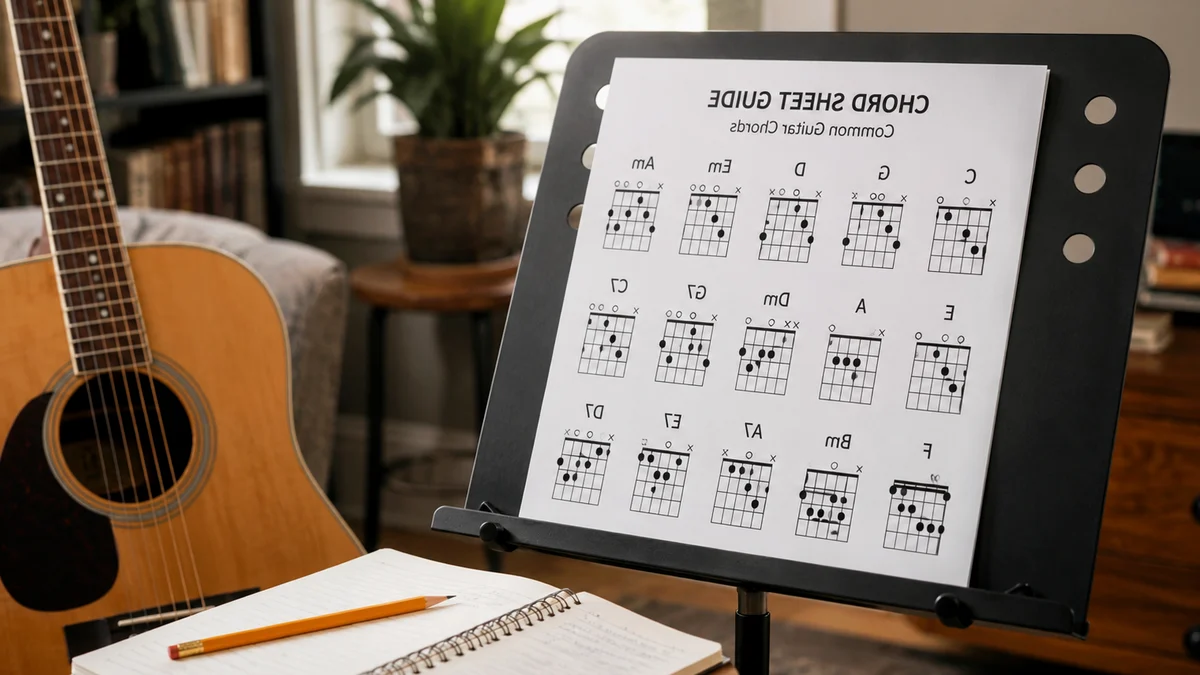
Walking into a music store or browsing online for your very first instrument can feel overwhelming. Rows of polished wood, gleaming chrome hardware, and various shapes and sizes stare back at you. As a guitar practice guide who has helped hundreds of students navigate this exact moment, I know that the right instrument can make or break your musical learning process. If your guitar is comfortable and stays in tune, you will practice more. If it is difficult to play, you may end up leaving it in the closet to gather dust.
This beginner guitar buying guide will simplify the process. We will look at the practical differences between acoustic, electric, and classical instruments, explore how body size and playability affect your progress, and help you avoid the common pitfalls that trip up many new players.
Step-by-Step Selection Process
If you want to know how to choose your first guitar quickly and effectively, follow this simple decision-making sequence:
- Identify your favorite music genre: Choose the style of guitar (electric, steel-string acoustic, or classical nylon-string) that matches the music you actually want to listen to and play.
- Determine your physical comfort level: Select a body size that matches your physical frame so you do not have to stretch your arms or back uncomfortably to reach the strings.
- Set a realistic budget: Allocate funds not just for the guitar itself, but also for essential accessories like a tuner, picks, a strap, and a gig bag.
- Prioritize playability over aesthetics: Ensure the guitar has a proper setup with low action (the distance between the strings and the fretboard) so it is easy to press down the strings.
- Test before you buy (if possible): Hold the guitar in your lap, feel the neck width, and make sure it feels comfortable to hold while sitting down.
Step-by-Step: How to Choose Your First Guitar for Beginners
Learning how to choose your first guitar for beginners is your very first lesson in musicianship. You do not need to know how to play a single chord yet to make a smart purchase. Instead, you need to understand how the physical design of the instrument matches your current lifestyle, physical build, and musical tastes.
Step 1: Define Your Musical Goals
Before looking at brands or price tags, ask yourself what songs made you want to play the guitar in the first place. If you dream of playing folk, indie, or singer-songwriter music, a steel-string acoustic guitar is likely your best starting point. If you want to play rock, metal, blues, or jazz, an electric guitar is the correct tool for the job. If you prefer classical music, flamenco, or gentle fingerstyle pieces, a classical guitar with nylon strings is the traditional choice.
Matching your instrument to your musical goals is crucial. If you buy an acoustic guitar but actually want to play heavy metal riffs, you will quickly become frustrated by the lack of distortion and sustain.
Step 2: Assess Your Living and Practice Space
Where will you practice? An acoustic guitar is self-contained and portable, but it can be surprisingly loud in a small apartment. An electric guitar, contrary to popular belief, can be the quietest option of all. You can plug headphones directly into a small practice amplifier or headphone amp, allowing you to practice late at night without disturbing family members or neighbors.
Step 3: Establish a Realistic Budget
A common question is how much a beginner should spend. While it is tempting to buy the cheapest option available online, ultra-cheap instruments often suffer from poor construction, high action, and sharp fret edges.
Aim for a mid-range entry-level instrument. Many reputable manufacturers offer excellent starter models that provide solid tuning stability and comfortable playability without breaking the bank.
Comparing Your Options: Acoustic, Electric, and Classical Guitars
To help you visualize your options, let us look at a direct comparison of the three primary types of guitars you will encounter.
| Guitar Type | Best for | Pros | Watch out for |
|---|---|---|---|
| Electric Guitar | Rock, Metal, Blues, Pop, Jazz | Slim neck, thin strings, very easy to press down, quiet practice with headphones | Requires an amplifier and cable, more expensive initial setup |
| Steel-String Acoustic | Folk, Country, Pop, Singer-Songwriter | Highly portable, no amp needed, bright and loud projection | Steel strings can be tough on beginner fingertips, larger body sizes |
| Classical Guitar | Classical, Flamenco, Folk | Nylon strings are soft on fingers, lightweight body, warm tone | Wide fretboard requires wider finger stretches, not suited for rock styles |
The Steel-String Acoustic Guitar
The steel-string acoustic is the classic campfire instrument. It is entirely self-contained, meaning you can pick it up and play anywhere without needing cables or electricity.
Acoustic guitars use steel strings under high tension, which creates a bright, loud, and resonant tone. However, this high tension means your fingers will have to work harder to press the strings down to the frets. Over the first few weeks of practice, you will develop protective calluses on your fingertips.
If you choose this path, look for a guitar with a solid wood top (often spruce or cedar) rather than a fully laminated top. Solid tops vibrate more freely, producing a richer sound that matures and improves as the wood ages.
The Electric Guitar
Many people assume beginners should start on an acoustic guitar before "graduating" to an electric. As a practice guide, I disagree with this old rule.
Electric guitars are actually the easiest to play physically. They use much thinner metal strings under lower tension, and the necks are significantly slimmer than those of acoustic guitars. This makes it much easier for small hands or beginners with limited hand strength to frets notes cleanly.
Keep in mind that an electric guitar requires an amplifier to be heard at its best. Fortunately, modern digital modeling amplifiers are affordable, compact, and packed with built-in effects that allow you to experiment with different sounds.
The Classical (Nylon-String) Guitar
Classical guitars look similar to steel-string acoustics, but they use nylon strings instead of steel. Nylon strings are much thicker, softer, and more flexible, making them far gentler on raw beginner fingertips.
However, classical guitars have very wide, flat fretboards. This extra width is made to give classical players room for intricate fingerpicking, but it can make it difficult for beginners with smaller hands to wrap their fingers around the neck to play standard open chords.
If you choose a classical guitar, ensure you are buying it because you love its warm, mellow tone and classical repertoire, rather than simply trying to avoid fingertip pain.
Crucial Factors: Playability, String Type, and Body Size
When learning how to learn how to choose first guitar step by step, you must look closely at the physical specifications of the instrument. These details determine how comfortable the guitar will feel during long practice sessions.
String Type and Finger Pain
The type of strings your guitar uses dictates your early physical comfort.
- Nylon strings are gentle but require a wider neck.
- Thin electric strings are easy to press down but can feel sharp under your fingers at first.
- Heavy acoustic strings require the most finger pressure but deliver the biggest, most resonant unplugged sound.
Do not let initial finger discomfort deter you. No matter which string type you choose, your fingertips will adapt within two to three weeks of consistent, short daily practice sessions.
Body Size and Ergonomics
Guitar bodies come in many shapes and sizes. A standard dreadnought acoustic guitar is the most common shape, but its deep, boxy body can feel strong to younger players or adults of smaller stature.
If you find a dreadnought too bulky, look for "concert," "auditorium," or "parlor" body sizes. These designs feature narrower waists and shallower depths, making them sit much closer to your body.
For electric guitars, double-cutaway designs (like the classic Stratocaster shape) feature contoured edges that rest comfortably against your ribs and forearm, reducing muscle fatigue while you practice.
The Importance of a Professional Guitar Setup
Even a high-quality guitar can play terribly if it is not adjusted correctly. This adjustment process is called a guitar setup.
A professional setup involves adjusting the truss rod (the metal rod inside the neck), filing the nut slots, and setting the saddle height. The goal is to get the strings as close to the fretboard as possible without causing them to rattle or buzz against the frets.
When purchasing your first instrument, ask the shop technician to perform a basic setup for you. A simple setup can change a stiff, stubborn instrument into an easy to play guitar that feels smooth and responsive.

How to Choose First Guitar Mistakes Beginners Make
When researching how to choose first guitar mistakes beginners make, you will find that most errors stem from a lack of preparation or falling for flashy marketing. Avoiding these common traps will save you time, money, and frustration.
1. Buying the Cheapest "All-in-One" Department Store Pack
It is incredibly tempting to buy a very cheap guitar package from a general department store or non-musical online retailer. These packages often contain instruments made of cheap, unstable materials.
The necks warp easily, the tuning pegs slip constantly, and the frets can be uneven and sharp. If your guitar will not stay in tune for more than five minutes, you will quickly lose interest in practicing. Stick to established musical instrument brands that specialize in manufacturing guitars.
2. Ignoring the Neck Profile and Nut Width
The "nut" is the small piece of plastic, bone, or synthetic material at the top of the fretboard where the strings guide into the tuning pegs. The width of the nut dictates how far apart the strings are from each other.
If you have short fingers and buy a guitar with a wide nut width, you will struggle to reach across the fretboard. Conversely, if you have large hands and buy a guitar with a very narrow nut, your fingers may crowd each other when playing tight chord shapes. Always hold the guitar to see how the neck profile fits the natural curve of your hand.
3. Forgetting Essential Accessories
Many beginners spend their entire budget on the guitar body itself, only to realize they cannot tune it, carry it, or play it comfortably.
When planning your budget, ensure you set aside enough money for:
- A reliable tuner (essential for keeping your instrument sounding correct).
- A padded gig bag to protect your investment from temperature changes and physical damage.
- A comfortable strap for playing while standing or stabilizing the guitar while sitting.
- A variety pack of picks of different thicknesses.
How Long Does It Take to Learn How to Choose First Guitar?
You might wonder: How long does it take to learn how to choose first guitar?
The actual process of researching, comparing options, and making a decision does not have to take months. With the right information, you can comfortably learn how to choose your first guitar in a single weekend.
Spend one evening reading about different body sizes and listening to tone comparisons online. Spend the next day visiting a local music store to hold a few instruments in your lap.
You do not need to know how to play a song to test a guitar's physical comfort. Simply sit with the instrument, rest your arm over the body, and feel the thickness of the neck. If it feels balanced and comfortable, you have found a winner.
Making Your Final Decision and Taking the First Steps
Once you have selected your instrument, the real fun begins. Bring your new guitar home, find a quiet space to practice, and establish a simple routine.
One of the most important habits you can build as a beginner is tuning your instrument every single time you pick it up. Guitars are made of wood and are highly sensitive to changes in temperature and humidity, which causes them to slip out of tune easily. Playing an out-of-tune guitar will train your ears incorrectly and make even perfectly placed chords sound bad.
To keep your instrument sounding its best, use the Guitar Tuner. It is a highly accurate, easy-to-use digital tool that helps you get your strings perfectly in pitch in seconds. Keeping your guitar in tune ensures that your practice sessions are productive and satisfying.
With a comfortable instrument, a reliable tuner, and a little bit of daily patience, you will be amazed at how quickly those first chords start to sound like real music. Keep your practice sessions short, focus on clean finger placement, and enjoy the process of learning your very first songs.
Related Chords.me Guides
For the next step, read Chromatic Tuner Guitar Guide: How to Tune Accurately as a Beginner, CAGED System Guitar Explained: Complete Beginner’s Guide to Fretboard Mast, and Fingerstyle Guitar for Beginners: A Practical Guide to Acoustic Picking before moving on. You can also test the same idea in another key and check each string with the guitar tuner while practicing this lesson.
Practice This With Chords.me
Use the Chord Transposer to test the idea in another key, then practice the same example slowly. Focus on clean notes and steady timing before increasing speed.
Frequently Asked Questions
What is the best way to choose your first guitar?
The best way to choose your first guitar is to slow the movement down, use a tuned guitar, and repeat a short exercise until it feels controlled. Speed should come after clean sound and steady timing.
Is how to choose your first guitar hard for beginners?
It can feel difficult at first, but it becomes manageable when you break it into small steps. Focus on clean notes, relaxed hands, and short practice sessions instead of trying to master everything in one day.
What should I practice first for how to choose your first guitar?
Start with the simplest version of the idea: one chord, one pattern, one short exercise, or one small section of the fretboard. Once that feels stable, add timing, transitions, or a second example.
What common mistakes should I avoid?
Avoid rushing, pressing harder than necessary, ignoring tuning, and practicing mistakes at full speed. Slow, accurate repetitions usually fix beginner problems faster than long unfocused practice sessions.
Which Chords.me tool helps with this topic?
The Guitar Tuner is the best supporting tool here because it helps with checking pitch, tuning stability, and practice accuracy. Use it before or during practice so the article’s examples translate into real playing more easily.
About the Contributor
Chords.me Tuning & Setup Desk Tuning, strings, and setup contributor
A brand contributor profile for Chords.me tuning and setup content. This desk focuses on tuning accuracy, string choice, fret buzz, intonation, action, and maintenance topics for everyday players. Content is checked for practical clarity, beginner readability, and accurate links to relevant Chords.me tools.