Easy Songs Using a Capo: Beginner Guide
Learn how capo songs work, why beginners use a capo, and how to choose easy starting positions for familiar chords.
Learning to play the guitar is an exciting learning process, but early on, you might feel limited by the number of chords you know. You might look up your favorite songs only to find they are written in keys like E-flat or B-flat, requiring difficult barre chords that make your hand cramp. This is where the capo becomes your best friend.
A capo is a small mechanical device that clamps onto the neck of your guitar, shortening the playable length of the strings. By doing this, it raises the pitch of your open strings, allowing you to play in different keys while using the basic open chords you already know.
Many of the most popular songs on the radio rely on this simple tool. In this guide, we will explore a variety of easy songs using a capo that will help you build your confidence, expand your repertoire, and make your practice sessions much more enjoyable.
Why Capo Songs Are Good for Beginners
Why Capo Songs Are Good for Beginners
>
Capo songs are ideal for beginner guitarists because they allow you to play in complex musical keys using only basic, easy-to-finger open chords (like G, C, D, and Em). By placing the capo on a specific fret, you raise the pitch of the instrument without changing your finger shapes. This eliminates the need for difficult barre chords while expanding your playable song library instantly.
What Songs Use a Capo?
If you listen closely to acoustic pop, folk, country, and rock music, you will hear the bright, chiming sound of a capoed guitar everywhere. Artists use capos for two primary reasons: to match the guitar's key to their vocal range, and to access the sweet, ringing tone of open chords in higher registers.
When asking what songs use a capo, the answer spans almost every genre. From the acoustic folk-pop of Ed Sheeran and Vance Joy to rock classics by Oasis and The Eagles, the capo is a staple of modern guitar playing. It is not a "cheat" tool; it is a professional transposition tool used by working musicians worldwide to make the guitar sound its best.
Using a capo also changes the physical feel of the guitar. As you move the capo up the neck, the frets get closer together. For beginners with smaller hands, playing simple songs using a capo on the fourth or fifth fret can actually be physically easier because you do not have to stretch your fingers as far to transition between chords.
Which Fret is Used Most in Popular Songs
If you look at a wide range of popular acoustic music, you will find that the second, third, and fourth frets are the most frequently used capo positions.
- The Second Fret: This is incredibly common for songs written in the key of A (using G major chord shapes) or the key of F# minor (using E minor shapes). It provides a warm, balanced tone that sits perfectly under a male or female vocal.
- The Fourth Fret: Often used to transpose songs into the key of B (using G shapes) or C# minor (using A minor shapes). It gives the guitar a bright, mandolin-like quality.
- The Fifth Fret: This position is often used for folk songs and fingerstyle arrangements, raising the pitch significantly to create a sparkling, delicate acoustic texture.
While there are no hard rules, knowing which fret is used most in popular songs helps you understand how artists think about vocal ranges. If a song is slightly too low for you to sing, moving the capo up just one or two frets can make the vocals feel effortless.
Master Table of Easy Capo Songs
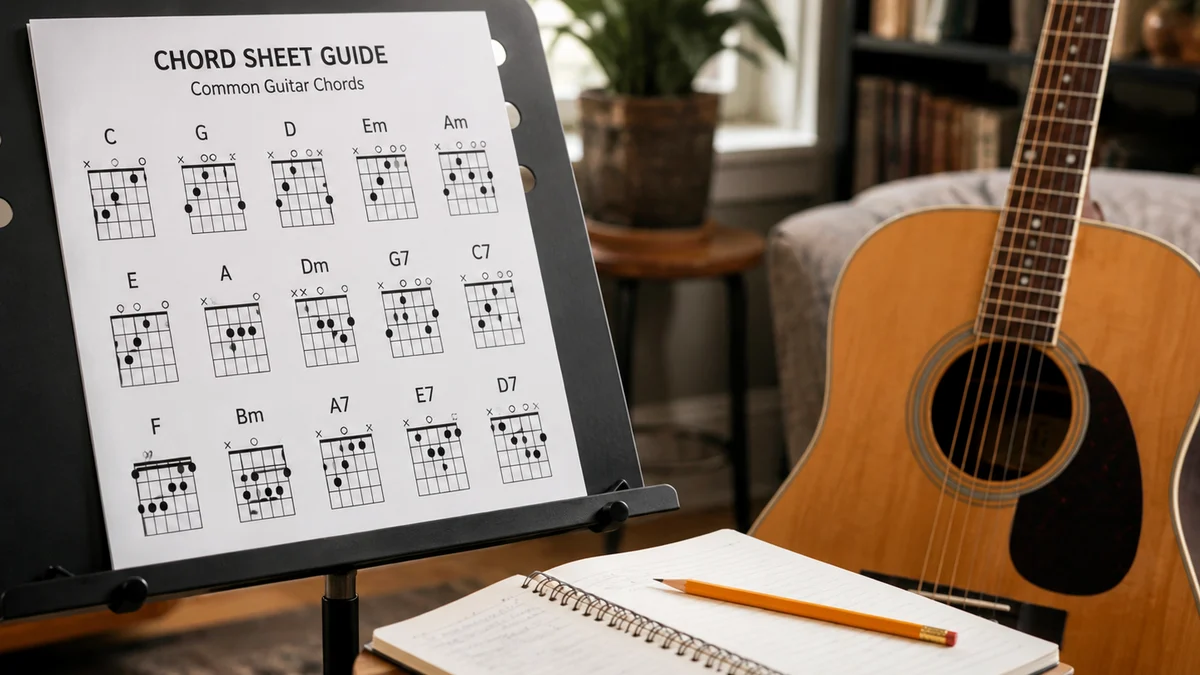
Before looking at the details of each song, here is a quick-reference table of beginner-friendly capo song list favorites. These tracks use common open chords and are perfect for building your beginner repertoire.
| Song Title | Artist | Capo Fret | Chord Shapes Used | Difficulty |
|---|---|---|---|---|
| Riptide | Vance Joy | Fret 4 | Am, G, C, F (optional) | Very Easy |
| Wonderwall | Oasis | Fret 2 | Em7, G, Dsus4, A7sus4 | Easy |
| Fast Car | Tracy Chapman | Fret 2 | Cmaj7, G, Em, D | Easy-Intermediate |
| Free Fallin' | Tom Petty | Fret 3 | D, G, A | Very Easy |
| Hey, Soul Sister | Train | Fret 4 | C, G, Am, F | Easy |
| Let It Be | The Beatles | Fret 5 | G, D, Em, C | Easy |
| The Scientist | Coldplay | Fret 3 | Am7, F, C, G | Easy |
7 Easy Guitar Songs That Use a Capo for Beginners
Let's take a close look at these practice songs. We will break down the chords, the strumming pattern, and give you practical tips on how to play them smoothly.
1. "Riptide" by Vance Joy (Capo 4)
"Riptide" is one of the most popular easy capo songs guitar teachers recommend to absolute beginners. It is upbeat, instantly recognizable, and uses a repetitive chord progression that runs through almost the entire song.
- Chord Shapes: Am, G, C
- Strumming Pattern: Down - Down - Up - Down - Up (D-D-UDU)
To play "Riptide," place your capo on the fourth fret. The chord progression is Am, G, and then C (which gets twice as many beats as the first two chords).
Keep your strumming hand moving consistently like a pendulum. Because the chord progression never changes, this is an excellent song to practice singing and playing at the same time.
2. "Wonderwall" by Oasis (Capo 2)
No beginner-friendly capo song list is complete without this 90s anthem. "Wonderwall" sounds complex, but it features a physical shortcut that makes it incredibly easy to play.
- Chord Shapes: Em7, G, Dsus4, A7sus4
- Strumming Pattern: Constant 16th-note strumming with emphasis on the backbeat
Place your capo on the second fret. The practical way to playing "Wonderwall" is to anchor your ring finger and pinky finger on the third fret of the high E and B strings (relative to the capo).
Keep those two fingers locked in place for the entire song. You only need to move your index and middle fingers to change the bass notes, making chord transitions incredibly fast and smooth.
3. "Fast Car" by Tracy Chapman (Capo 2)
While the studio version features a clear fingerpicked riff, you can easily play "Fast Car" using simple strummed open chords. It is one of the best simple songs to practice capo positions because of its syncopated rhythm.
- Chord Shapes: Cmaj7, G, Em, D
- Strumming Pattern: Down, Down-Up, Down-Up
Place your capo on the second fret. If you struggle with the standard C major chord, the Cmaj7 chord (which just requires you to lift your index finger off the B string) works beautifully here.
The chord changes happen quickly on the off-beats, so start by practicing with single downstrums on each chord change before building up to the full strumming pattern.
4. "Free Fallin'" by Tom Petty (Capo 3)
Tom Petty was a master of writing simple, powerful songs using only three chords. "Free Fallin'" is a perfect example of how a capo can change three basic shapes into a strong hit.
- Chord Shapes: D, G, Asus4 (or A)
- Strumming Pattern: Down, Down, Down-Up-Down
With your capo on the third fret, you will use the D, G, and A shapes. The progression relies on a very specific rhythmic pulse.
You play D, then transition to G, back to D, and then to A. Focus on keeping your timing steady. Because the tempo is slow, it gives your brain plenty of time to anticipate the next chord change.
5. "Hey, Soul Sister" by Train (Capo 4)
Originally played on a ukulele, you can recreate the bright, cheerful sound of "Hey, Soul Sister" on the acoustic guitar by placing your capo high up on the neck.
- Chord Shapes: C, G, Am, F
- Strumming Pattern: Down - Up - Down - Up (staccato, light feel)
With the capo on the fourth fret, you will play C, G, Am, and F. If you are a beginner who still struggles with the full F barre chord, you can use the easy F major7 shape (XX3210) or the small F shape (XX3211) instead.
Keep your strumming light and bouncy to mimic the ukulele feel of the original recording.
6. "Let It Be" by The Beatles (Capo 5 - G Shape Version)
While the piano-driven original is in the key of C, playing "Let It Be" on the guitar with a capo on the fifth fret using G major shapes makes it incredibly comfortable for beginner guitarists.
- Chord Shapes: G, D, Em, C
- Strumming Pattern: Steady downstrums on the beat (four per chord)
This version uses the classic "four chords of pop" progression. By placing the capo on the fifth fret, your G, D, Em, and C shapes will sound in the original key of C major.
The steady, quarter-note strumming pattern allows you to focus purely on clean chord changes and vocal delivery.
7. "The Scientist" by Coldplay (Capo 3)
This clear ballad is originally played on the piano, but it translates perfectly to the acoustic guitar. It is an excellent song for practicing minor-to-major transitions.
- Chord Shapes: Am7, F, C, G
- Strumming Pattern: Down, Down, Down, Down (steady eighth-note pulse)
Place your capo on the third fret. The Am7 chord is incredibly easy to play—it is just a standard C major chord but without your ring finger on the A string.
The steady, driving rhythm of the strumming pattern mimics the pulsing piano chords of the original track, making it highly satisfying to play.
Simple Songs to Practice Capo Positions and Transposition
Once you have mastered a few of these easy songs using a capo, you can begin using the tool to explore transposition. Transposition is simply the process of changing the key of a song so that it is easier to sing or play.
For example, if you want to play a song that uses the chords G, C, and D, but those chords are too low for your voice, you can put a capo on the second fret. Now, when you play those same G, C, and D shapes, you are actually sounding the chords A, D, and E. Your fingers do the exact same work, but the music sounds higher.
If you find a chord sheet online that is written in a difficult key, you do not have to give up. You can use the Chords.me Guitar Capo Calculator to instantly find out where to place your capo to translate those difficult chords into easy, comfortable open shapes.
This tool is incredibly helpful when you are building your beginner repertoire and want to adapt any song to fit your current skill level.
Common Mistakes When Using a Capo
Even though using a capo is straightforward, beginners often run into a few common issues that can make their guitar sound out of tune or buzz. Here is how to avoid them:
1. Placing the Capo Directly on the Fret Wire
If you place the rubber bar of the capo directly on top of the metal fret wire, you will deaden the strings, resulting in a dull, thudding sound. Conversely, if you place it too far back in the middle of the fret, the strings will buzz when you pluck them.
- The Fix: Place your capo just slightly behind the metal fret wire (about 2 to 3 millimeters). This provides the cleanest tone with the least amount of tension required.
2. Squeezing the Strings Out of Tune
Many spring-loaded capos apply a strong amount of pressure to the strings. If you clamp the capo down carelessly, it can pull the strings sideways or push them down too hard, stretching them sharp.
- The Fix: Always check your tuning after putting a capo on. Put the capo on first, then use a clip-on tuner to make minor adjustments to your strings. When you take the capo off, remember to check your tuning again, as the strings may have slipped slightly.
3. Using the Wrong Type of Capo
Not all capos are created equal. A capo designed for a classical guitar (which has a completely flat fretboard) will not work well on an acoustic or electric guitar (which have curved, radiused fretboards).
- The Fix: Make sure you are using a curved capo designed specifically for acoustic or electric steel-string guitars. Trigger-style capos are great for quick changes, while screw-adjustable capos allow you to dial in the exact amount of tension needed to avoid tuning issues.
Tips for Building Confidence with Capo Songs
As you practice these tracks, keep these three essential tips in mind to help speed up your progress:
- Focus on the "Pivot" Fingers: When changing chords, look for fingers that do not need to move, or can simply slide along a string to get to the next shape. In "Wonderwall," keeping your ring and pinky fingers anchored is Practical shortcut.
- Master One Strumming Pattern First: Do not try to learn a different, complex strumming pattern for every single song. Master a basic "Down, Down, Up, Up, Down, Up" pattern first. You can apply this single pattern to almost all the simple songs using a capo listed above.
- Use a Metronome: It is easy to speed up during the easy parts of a song and slow down during the chord changes. Practice with a slow, steady metronome beat to ensure your transitions are smooth.
With a capo in your gig bag and a few basic open chords under your fingers, there is virtually no limit to the music you can play. Start with one song, master the transitions, and watch your confidence grow as you build a setlist of songs you love to play.
Related Chords.me Guides
For the next step, read How to Change a Song Key, Guitar Capo FAQs: Common Beginner Questions, and Blues Scale Guitar Guide: Beginner Practice Guide before moving on. You can also test the same idea in another key and compare capo positions while practicing this lesson.
Practice This With Chords.me
Use the Guitar Capo Calculator to test the fret position, then compare the result with the Chord Transposer. Focus on clean notes and steady timing before increasing speed.
Frequently Asked Questions
What is the most common capo fret used in songs?
Frets 1 through 3 are the most commonly used capo positions in recorded songs, since they raise the pitch modestly while keeping familiar open-chord shapes.
Are capo songs easier for beginners?
Yes, many capo songs are easier for beginners because they rely on simple open-chord shapes rather than barre chords, even though the resulting key is higher.
What chords are used most with a capo?
The chord shapes used most often with a capo are simple open shapes like G, C, D, Em, and Am, since they combine easily with a capo at any fret.
About the Contributor
Chords.me Tuning & Setup Desk Tuning, strings, and setup contributor
A brand contributor profile for Chords.me tuning and setup content. This desk focuses on tuning accuracy, string choice, fret buzz, intonation, action, and maintenance topics for everyday players. Content is checked for practical clarity, beginner readability, and accurate links to relevant Chords.me tools.