D Major Chord Guitar Guide: Learn This Essential Open Chord
D Major Chord Guitar Guide: Learn This Essential Open Chord: clear guitar guide with practical examples, common mistakes, and Chords.me practice tools.
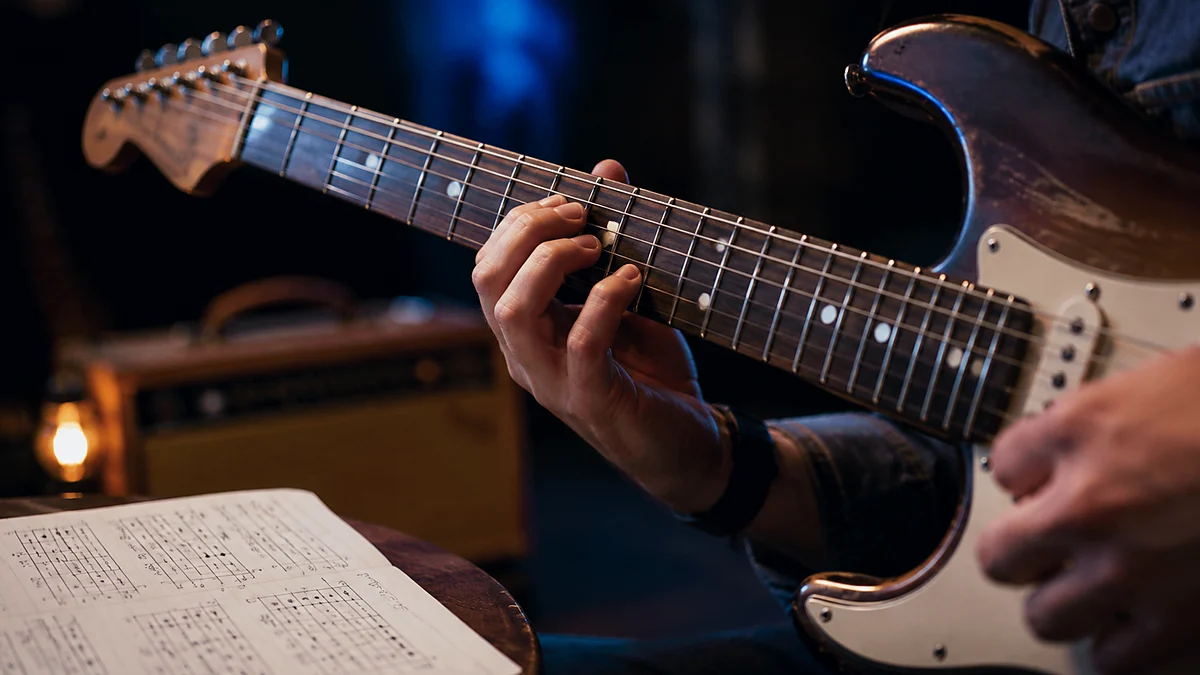
Learning to play the guitar is a learning process of building blocks, and few blocks are as fundamental as the D major chord. Alongside C major and G major, this shape forms the backbone of Western popular music. If you have ever wanted to play acoustic classics, rock anthems, or simple folk tunes, mastering this shape is non-negotiable.
As a beginner, your fingers might feel clumsy at first. This is completely normal. The muscles in your fretting hand are learning to move in entirely new ways. This guide will break down the mechanics of the D major chord, explain the underlying music theory in simple terms, and provide practical exercises to help you transition between chords smoothly.
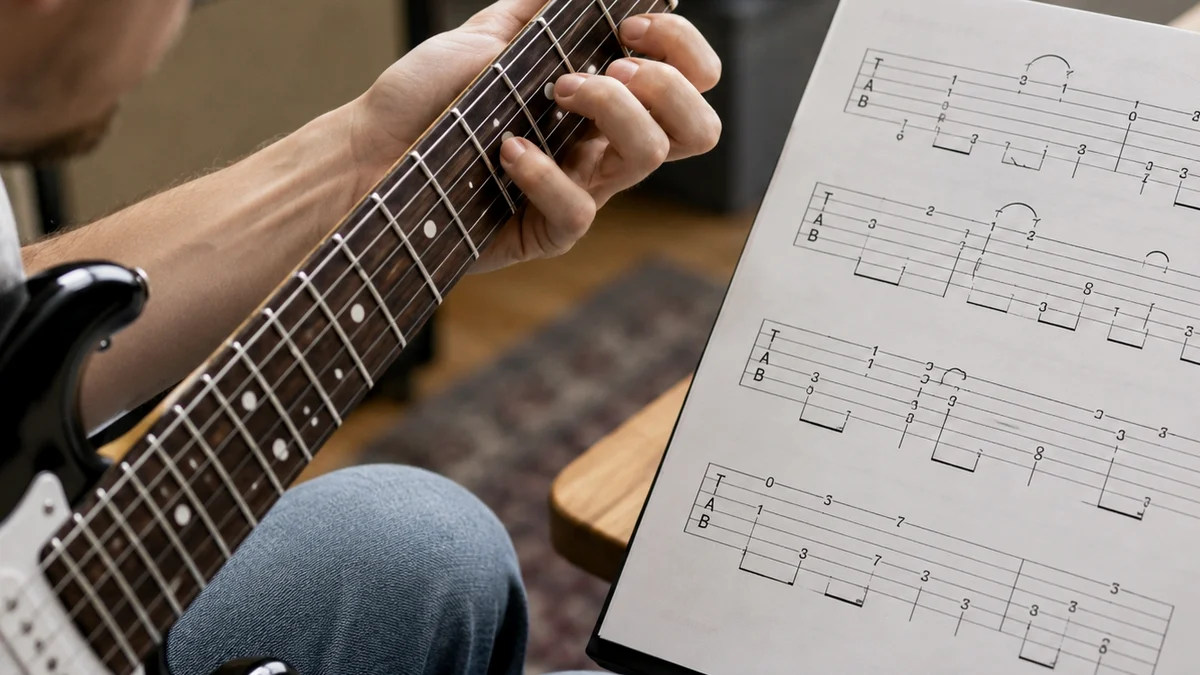
What is the D Major Chord on Guitar? The D major chord on guitar is a fundamental open chord built from three notes: D (the root note), F# (the major third), and A (the perfect fifth). To play the standard open D major chord, place your index finger on the 2nd fret of the G (3rd) string, your ring finger on the 3rd fret of the B (2nd) string, and your middle finger on the 2nd fret of the high E (1st) string. Strum only the top four strings, leaving the low E and A strings silent.
What is the D Major Chord on Guitar?
To understand the D major chord guitar shape, it helps to understand what a major chord actually is. In music theory, a major chord is a triad, which means it consists of three distinct notes played together. These notes are derived from the major scale of the root note.
For the D major scale, the notes are D, E, F#, G, A, B, and C#. To build a major triad, we take the 1st (root), 3rd (major third), and 5th (perfect fifth) notes of this scale.
- Root Note: D
- Major Third: F#
- Perfect Fifth: A
When you play these three notes simultaneously, you get the bright, happy sound characteristic of the D major chord.
Is D Major Chord Guitar Good for Beginners?
Yes, the D major chord guitar shape is exceptionally good for beginners. It is one of the first open chords taught in any structured guitar curriculum. Because it only requires three fingers and utilizes open strings, it does not demand the hand strength required for barre chords.
However, it does present a unique challenge: precision. Because you only strum four of the six strings, you must learn to control your strumming hand. This makes it an excellent tool for developing both fretting-hand accuracy and strumming-hand control.
How to Learn D Major Chord Guitar Step by Step
Let us look at how to learn d major chord guitar step by step. Grab your guitar, make sure it is in tune, and follow these steps carefully.
Step 1: Position Your Index Finger (Finger 1)
Locate the G string, which is the third string from the bottom (highest pitch). Place your index finger on the second fret of this string. Ensure your finger is resting just behind the metal fret wire, not directly on top of it. This note is an A.
Step 2: Position Your Middle Finger (Finger 2)
Next, locate the high E string, which is the thinnest string on your guitar (the first string). Place your middle finger on the second fret of this string. This note is an F#. Keep your finger arched so it does not touch the adjacent B string.
Step 3: Position Your Ring Finger (Finger 3)
Now, locate the B string, which is the second string from the bottom. Place your ring finger on the third fret of this string. This note is a D. This finger needs to stretch slightly further than the other two, which is where many beginners feel a bit of tension.
Step 4: Check Your Thumb Position
Your thumb should rest comfortably on the back of the guitar neck, roughly opposite your middle finger. Avoid wrapping your thumb too far over the top of the neck for now. Keeping your thumb low on the back of the neck provides the leverage your fingers need to arch properly.
Step 5: Strum the Correct Strings
Look at your strumming hand. Position your pick over the open D string (the fourth string). Strum downward from the D string through the G, B, and high E strings. Do not play the low E (sixth) or A (fifth) strings. The open D string acts as your bass root note, giving the chord its deep, satisfying foundation.
Visualizing the Chord: Diagram and Fingering Table
To help you visualize this shape on the guitar fretboard, let us look at a quick reference table. This table outlines where each finger goes, the common issues associated with each placement, and an easier alternative if you are struggling with finger flexibility.
| Chord Shape | Finger Position | Common Problem | Easier Option |
|---|---|---|---|
| Standard Open D Major | Index on G2, Middle on E2, Ring on B3 | Ring finger mutes the high E string. | Play a D5 power chord (skip the high E string entirely). |
| D Major Barre Chord (A Shape) | Barre 5th fret, ring finger bars D, G, and B strings at the 7th fret | Muffled notes inside the barre. | Play only the top three strings at the 7th fret. |
| D Major Barre Chord (E Shape) | Barre 10th fret, middle on G11, ring on A12, pinky on D12 | Requires significant hand strength. | Stick to the open D major shape. |
Using chord diagrams is the standard way to read guitar chord shapes. In a standard chord diagram, vertical lines represent the strings (from left to right: Low E, A, D, G, B, high e). Horizontal lines represent the frets. An "X" above a string means do not play it, while an "O" means play it open (without fretting). For the open D major chord, you will see an X over the 6th and 5th strings, an O over the 4th string, and dots indicating finger placement on the 3rd, 2nd, and 1st strings.

Common D Major Chord Guitar Mistakes Beginners Make
Even though this is an entry-level shape, there are several d major chord guitar mistakes beginners make. Recognizing these early will save you hours of frustration.
1. Strumming All Six Strings
The most common mistake is dragging the pick across all six strings. The low E and A strings do not sound good when mixed with a standard open D chord. Strumming the low E string introduces an E note, which clashes with the D root note and makes the chord sound muddy and unfocused. Train your eye to target the fourth string as your starting point.
2. The "Dead" High E String
If you play your D chord and hear a dull click instead of a ringing high E string, your ring finger is likely drooping. Because the ring finger sits on the third fret of the B string, it is very easy for the fleshy underside of that finger to rest against the first string.
To fix this, arch your fingers. Imagine you are holding a small tennis ball in the palm of your fretting hand. This force-corrects your hand posture, ensuring only your fingertips touch the guitar fretboard.
3. Placing Fingers Directly on the Fret Wires
If you place your fingers directly on top of the metal fret wires, the note will sound muted or buzzy. Conversely, if you place your fingers too far behind the fret (closer to the headstock), you will have to press twice as hard to get a clean sound. Aim for the sweet spot: just a millimeter or two behind the fret wire.
Alternative Guitar Chord Shapes for D Major
Once you are comfortable with the open position, it is highly beneficial to explore alternative guitar chord shapes. The guitar fretboard is unique because the same chord can be played in multiple locations. Learning these shapes expands your sonic palette and makes you a more versatile player.
The D Major Barre Chord (A Shape)
This shape is located higher up the neck. To play it, you use your index finger to press down (barre) five strings at the 5th fret, from the A string down to the high E string. Then, you use your ring finger (or a combination of middle, ring, and pinky fingers) to fret the 7th fret of the D, G, and B strings.
This shape has a tighter, punchier sound than the open version. It is highly common in funk, reggae, and rock music because it is easy to mute with your fretting hand.
The D Major Barre Chord (E Shape)
This version is located at the 10th fret. You lay your index finger flat across all six strings at the 10th fret. Your middle finger goes to the 11th fret of the G string, your ring finger to the 12th fret of the A string, and your pinky to the 12th fret of the D string. This shape is powerful and full-bodied, making it perfect for driven electric guitar tones.
The Two-Finger D5 (The Easy Option)
If you are an absolute beginner and your hand is cramping, you can play a simplified version called a D5 chord. Simply place your index finger on the 2nd fret of the G string and your ring finger on the 3rd fret of the B string. Leave the high E string silent. Strum from the open D string. While technically a power chord (it lacks the major third note, F#), it works beautifully as a temporary substitute while you build hand strength.
Practical Examples and Chord Progressions
How do you use d major chord guitar in actual music? Chords are meant to be played together. The best way to practice the D major chord is to place it inside a chord progression.
Progression 1: The Classic Folk/Rock Progression (I - IV - V)
This is the most common progression in acoustic music. It uses three open chords: D major, G major, and A major.
- Progression: D - G - A - G
- Strumming Pattern: Down, Down, Up, Up, Down, Up (on each chord)
When transitioning from D to G, try to keep your hand relaxed. There is no "anchor" finger here, meaning all your fingers must leave the fretboard to form the G chord. Practice this slowly, prioritizing clean notes over speed.
Progression 2: The Pop/Rock Progression (I - V - vi - IV)
This progression has been used in hundreds of hit songs across the decades. It introduces a minor chord for contrast.
- Progression: D - A - Bm - G
- Strumming Pattern: Simple downward strums on beats 1, 2, 3, and 4
If you struggle with the Bm (B minor) barre chord in this progression, do not worry. You can use the Chords.me Chord Transposer to shift this progression into a key that uses easier shapes, or use the Capo Calculator to find a comfortable fret to place your capo so you can keep playing simple open shapes.
Tips for Practicing and Perfecting the D Chord
To Learn This chord quickly, you must practice smart. Here are three highly effective exercises used by professional guitar teachers to build muscle memory.
1. The "Squeeze and Release" Method
Form the D major chord shape on your fretboard. Strum each string individually to make sure all four notes ring out clearly. Once it sounds perfect, squeeze your fingers gently against the fretboard for five seconds. This builds muscle memory.
Now, release your hand entirely. Shake it out, count to three, and try to place your fingers back into the D major shape all at once. Repeat this ten times daily.
2. Hovering Exercise
Hold your fingers just a millimeter above the strings in the exact shape of the D major chord. Do not touch the strings or the wood of the fretboard. Try to hold this "hover" position for thirty seconds. This exercise trains your brain to pre-shape the chord in the air before your hand lands on the neck, which is the practical way to fast chord changes.
3. Use the Chords.me Tools
To make your practice sessions more productive, utilize the online music tools available on Chords.me. If you are practicing a song and the key feels too high for your voice, use the Chord Transposer to find a key that fits your vocal range while keeping your favorite open chord shapes.
If you want to play along with a recording that uses a capo, the Capo Calculator will show you exactly where to place your capo to match the recording's pitch while playing your familiar D major chord shape.
Mastering the D major chord is a significant milestone for any guitar player. It requires patience, precise finger placement, and consistent practice. By avoiding common mistakes like flat fingers and accidental string muting, you will quickly develop a clean, resonant sound. Keep your practice sessions short but daily, use the tools available to simplify your learning process, and enjoy the reward of playing your favorite songs with confidence.
Related Chords.me Guides
For the next step, read Major vs Minor Keys: Guitar Guide, Major Scale Guitar Guide: Beginner Practice Guide, and Open G Tuning Guide before moving on. You can also test the same idea in another key and check each string with the guitar tuner while practicing this lesson.
Practice This With Chords.me
Use the Chord Transposer to test the idea in another key, then practice the same example slowly. Focus on clean notes and steady timing before increasing speed.
Frequently Asked Questions
What is D Major Chord Guitar?
D Major Chord Guitar is a guitar-learning topic that helps players build a clearer connection between technique, sound, and practice. For beginners, the most useful approach is to learn the basic idea first, then apply it slowly on a tuned guitar.
Is d major chord guitar hard for beginners?
It can feel difficult at first, but it becomes manageable when you break it into small steps. Focus on clean notes, relaxed hands, and short practice sessions instead of trying to master everything in one day.
What should I practice first for d major chord guitar?
Start with the simplest version of the idea: one chord, one pattern, one short exercise, or one small section of the fretboard. Once that feels stable, add timing, transitions, or a second example.
What common mistakes should I avoid?
Avoid rushing, pressing harder than necessary, ignoring tuning, and practicing mistakes at full speed. Slow, accurate repetitions usually fix beginner problems faster than long unfocused practice sessions.
Which Chords.me tool helps with this topic?
The Guitar Tuner is the best supporting tool here because it helps with checking pitch, tuning stability, and practice accuracy. Use it before or during practice so the article’s examples translate into real playing more easily.
About the Contributor
Chords.me Tuning & Setup Desk Tuning, strings, and setup contributor
A brand contributor profile for Chords.me tuning and setup content. This desk focuses on tuning accuracy, string choice, fret buzz, intonation, action, and maintenance topics for everyday players. Content is checked for practical clarity, beginner readability, and accurate links to relevant Chords.me tools.